Is Australia following China in metadata collection?

The Australian Security Intelligence Organisation (ASIO), the Australian Federal Police (AFP) and Police already have access to the metadata of Australian citizens from certain Internet Service Providers (ISPs) and Telecommunication companies (Telcos). The list of others that have and can already gain access to metadata without a warrant and for undisclosed purposes include Centrelink, Local councils, The RSPCA, The ATO, Australia Post, Energy regulators, Medicare and even the Victorian Taxi Directorate. Over 330,000 requests were made for metadata in the last financial year (2012/13).

China’s highest court, The Supreme People’s Court (SPC) has just recently released a new guideline pressuring Internet Service Providers ISPs to hand over the metadata of users suspected of “rights violations”. The court has called for the ISPs to be punished if they refuse to hand over the names, IP addresses and other metadata of those believed to have committed these violations. The Chinese government controls the media and online social networks are subject to heavy censorship.

It also wants to crack down on paid Internet postings and post deletions even though the government uses the same tactics to “guide public opinion” and to crack down on dissent. “Some posters, as well as workers at network service providers, often use their computer skills to make money, and that leads to a disorderly Internet,” court spokesman Sun Jungong told the state-run China Daily newspaper. Hundreds of bloggers and journalists have been rounded up over the last year in a government-backed campaign against “Internet rumours”.

The court also deemed that well-known Internet commentators known as “Big Vs” will be held to a higher standard than ordinary online posters. “If you are a verified celebrity, your obligations when re-posting online information are greater than those of the general public,” senior SPC judge Yao Hui told Xinhua news.

The “wu mao” (online commentators) are employed by the government to post comments that are favourable towards their party policies and to shape public or “netizens” opinions on Internet message boards and forums. The commentators are known as the 50-Cent Party, as they are reported to be paid 50 cents for every post that steers a discussion away from anti-party content or that advances the Communist Party line. In 2010, the state-run Global Times newspaper reported that Gansu province alone was looking to recruit 650 full-time web commentators “to guide public opinion on controversial issues”. Private companies that try to do the same, will be punished according to the new regulation. Paid Internet postings “can boost reputations by creating the impression that the online voices are genuine, when in truth the voices are purchased,” the China Daily newspaper reported.
When an anonymous wu-mao was asked how big a role they think that their industry plays in guiding public opinion in China they replied: “Truthfully speaking, I think the role is quite big. The majority of netizens in China are actually very stupid. Sometimes, if you don’t guide them, they really will believe in rumours.”
When the interviewer responded: “Because their information is limited to begin with. So, with limited information, it’s very difficult for them to express a political view.”
They replied: “I think they can be incited very easily. I can control them very easily. Depending on how I want them to be, I use a little bit of thought and that’s enough. It’s very easy. So I think the effect should be quite significant.”
The similarities between both countries becomes apparent when we consider the rise of Australia’s ‘online commentators’ which came to light during the Federal election last year. The Labor Party (ALP) and the Liberal Party (LNP) were accused of buying fake Twitter followers and Facebook fans, mobilising alleged unpaid Twitter armies and with some politicians such as LNP Currumbin branch chairman Tim Gear reportedly boasting on his Facebook page that: “We all have troll accounts.” 

It’s worth noting that the ‘Cash for Tweets’ scandal in 2012 involving South Australia Tourism, where celebrities were paid to promote Kangaroo Island with positive tweets, was found not to be in breach of the Australian Consumer Law (ACL).

In June this year Wikipedia cracked down on bias with a new subsection to it’s Terms of Use stating that anyone editing an article on behalf of an organisation must add their affiliation to their edit summary, user page or talk page. Paid-for editors are only required to disclose their employer or client and affiliation, not specific details of how they are paid. Wikipedia said on it’s FAQ page that the move protected it’s ‘good-faith editors’ of Wikimedia projects.

The non-profit organisation, which operates Wikipedia, warned companies to “avoid embarrassment” by complying: “As repeated real life examples illustrate, paid editing without appropriate disclosure can result in negative publicity for companies, clients, and individuals…“Failing to include a disclosure with a paid contribution may lead to a loss of trust with the broader public in addition to the Wikimedia community.” The subsection was added to section four of Wikimedia’s Terms of Use summary page. It warned that “deceptive business practices” may be illegal in many jurisdictions including the US and the EU.

The former John Howard government was caught out in 2007 for 162 instances of editing Wikipedia entries relating to the Children Overboard Affair and Mandatory Detention. On the controversial policy of mandatory detention for asylum-seekers, an employee inserted the word “allegedly” into a statement saying that immigration detainees were subject to inhumane conditions. The children overboard affair where Mr Howard was acting on intelligence at the time, was that refugees seeking asylum in Australia were using a supposed lure to secure rescue and passage by throwing their children overboard. The now defunct website, WikiScanner, also identified the Department of Defence (DOD) as being behind more than 5,000 changes to entries on the online encyclopedia. Wikiscanner was a homemade programme created by US hacker Virgil Griffith, it didn’t identify individuals but revealed which organisation’s computer network was behind a Wikipedia entry. Mr Griffith’s programme pinpointed the CIA and the Vatican as behind hundreds of self-serving edits on the popular website.

The DOD blocked staff from editing Wikipedia after they had made changes ranging from correcting information about the Australian military to removing negative comments about Howard governments Liberal Party. “Defence has closed personal edit access down, though employees will still be able to browse Wikipedia for information purposes,” a defence spokesman said at the time. The head of the then Department of Prime Minister and Cabinet, Dr Peter Shergold, said changes to Wikipedia were not made by anyone in his department or the Prime Minister’s office. He said the network address appearing next to the changes is that of another customer on the same internet service provider.

The Australian government is currently seeking to have Telecommunication companies retain data of all Australian’s for up to two years. Details on this are scarce with two discussion papers released to the industry but not to the public. The first paper was leaked to Fairfax Media, stating that ISPs would need to retain customer details including their name, address, registered devices, identification used on the account, billing details, and the “available bandwidth” and “upload and/or download volumes” on a user’s broadband service. The second discussion paper is still not available to the public, however iiNet has made it’s response public.

They said that they had received a significant level of feedback from both their customers and other members of the public and that the majority supported their opposition to mandatory data retention. And further that they believed that ‘blanket data retention’ is mass surveillance. It is not something that they currently do, and that it would add significant costs to the way that they do in their business. The basis of their objections is the lack of evidence that the proposed changes will be more effective than the current laws that already exist with which they already co-operate with law enforcement agencies; a lack of justification as to why the time frame to retain data is two years; no explanation as to why the existing (and less than two years) preservation notice regime is insufficient; it specifies that it’s agents are not ‘agents of the state’ and if that it is to take on the role, the government should be responsible for the storage or security of the metadata. It also mentions the International trend away from blanket data retention by progressive governments, particularly in Europe. It has many serious unanswered questions for Attorney-General (AG) George Brandis such as, how the system would incorporate the Privacy Act; limits on agency access to data, metadata disposal and how the government proposed to ensure that the data is only used for National security or serious law enforcement.
Couple this with The Sydney Morning’s Herald Deputy technology editor, Ben Grubb’s 15 month pursuit of obtaining his own metadata from Telstra and one wonders what is really going on. In short after many months of wrangling to get his metadata and getting nowhere, he ended up with a public hearing last week. In the hearing shortly after, Telstra’s barrister Jeremy Masters spent over two hours explaining Telstra’s reasons for refusing access, focusing on it’s belief that metadata is not ‘personal information’ and the extra costs and difficulty involved in gaining access to the information. Mr Grubb has a good point when he considers it odd that this request is difficult when they provide this information to government agencies for a fee that he has no problem paying.
He hopes that Privacy commissioner Timothy Pilgrim sides with him, especially considering The ZDNet’s Josh Taylor’s Freedom Of Information (FOI) request resulted in the AG’s department calling his metadata ‘personal information’. The government is still considering releasing the information and has asked Mr Taylor for $621.
The AFP at the end of August this year were found to have mistakenly published highly sensitive information – including metadata – connected to criminal investigations, in a serious breach of operational security. The Guardian Australia revealed that the AFP provided documents to the Senate, which were then made publicly available online on parliamentary sites and other sources for several years, and which accidentally disclosed information about the subjects and focus of criminal investigations and telecommunications interception activities. The information that police disclosed included the address of a target subject to surveillance, the types of criminal investigations and offences being investigated, the names of several AFP officers not publicly available and other information including the phone number of an individual connected to an investigation.
If we recall the Australian’s government’s Immigration security breach in February this year, that exposed 10,000 refugee detainees data, we have to ask if the proposed extra security measures are not just unwarranted and unsubstantiated but ill conceived. Opening the door for metadata collection in the way that the government is proposing, in what we know so far can only open the way for corruption and the manipulation of information for vested interests and things like identify theft.
And more common base human traits like nosiness, revenge and envy?
In Queensland (QLD) last year the police came under fire for pulling the mobile phone records of their officers under the guise of alleged fake criminal probes. It is understood that police investigators had sought the records belonging to an officer suspected of throwing a sickie; an officer missing on the job for several hours and to determine whether police cadets were having sexual relationships at academies.

QLD police requested Call Charge Records (CCRs) 36,531 times last year, which was three times the number made in 2009. CCRs reveal details of when and where calls and texts are made and received, the time and the duration of the conversation. It doesn’t include the content of conversations. The Police Union (PU) president Ian Leavers said the access of police officers’ private telephone records for minor disciplinary matters was done in a “potentially illegal and unlawful manner”.

There is still hope that these proposed laws will at the very least be scrutinised by the Senate because when the amended legislation was first passed, there were 12 Independent and Greens Senators who did vote against the legislation. And it’s there that the Greens Communications spokesperson Scott Ludlam is hoping to gain an additional 25 votes from the ALP party to block the upcoming mandatory data retention legislation. “Can we please make the internet uninhabitable for Labor senators for the next two weeks?,” Mr Ludlam asked the Communications Day Congress in Melbourne at the end of last September.

In conclusion I find that the unmitigated rush for every skerrick of our metadata is unjustified. Could new rushed security laws be used against citizens in Australia through law drafting ineptness? Especially when we consider journalist, Peter Greste and similar draconian laws in Egypt. Anything that is so rushed which is so important to every Australian’s liberties, especially as Global citizens, needs to always be questioned and not deemed as being a part of any Anti-team.

Reading between the lines on the latest Iraq/Syrian war and Australia’s involvement Part 2

Following on from my post a couple of weeks ago, Australia is now officially a part of the renewed war in Iraq and Syria. This has always been a geopolitical issue which has been a big part of the Islamic State’s (IS) success. Reports are coming through that Kobani (known as Ayn al-Arab in Arabic), just miles from the Syrian and Turkish border is about to fall into the hands of IS. Turkey has not only had unprecedented numbers of Syrian refugees spilling into Turkey but it’s also been preventing Turks, and Syrian Kurds that want to cross the border again back into Syria to fight against IS.

Syrian Kurds are the largest ethnic minority in Syria, with 10-15 % of the country’s population, followed closely by Syrian Alawites (the religion of President Mr Assad) with 12%.

Tension on the Turkish side of the border was soaring on Monday the 22nd September. With clashes between Turkish security forces and Kurds wanting to approach border gates to reach their relatives or to cross into Syria continuing throughout the day, with Turkish police using teargas and water cannons against protesters.

“Turkish soldiers at the border don’t let me cross, they say it’s not allowed,” says 29 year old Kobani local Ahmed. “All I want is to defend my land and my village. I will find a way to get there.” One of his friends says that getting across the border has become difficult, and that Turkish soldiers control many of the illegal crossing points. “Since there are landmines in many areas here, you can’t just walk anywhere,” Ahmed says. “But if I live or die, I will go back to Kobani.”

Another man from Kobani, aged 33, who wishes to remain anonymous fearing for his relatives safety thought to have been captured by IS, brought his family to Gaziantep three days ago. He’s now on his way back to the border. For the past three months he’s been fighting with the Popular Protection Units (YPG), being the armed wing of the Democratic Union party (PYD), and a Syrian Kurdish affiliate of the Kurdistan Workers’ party (PKK). In the past he manned a checkpoint close to the Euphrates, an area now overrun by IS. “We get an AK and 60 bullets each,” he explains. “That’s all we have to defend ourselves against the massive arsenal of Islamic State.”

Many of the Syrian Kurds who have been driven out of Kobani over the past week report that Isis uses artillery and heavy weaponry thought to have been looted from Iraqi arsenals. “They have military vehicles, rockets, missiles. What do you think an AK-type gun can do against that?” the man from Kobani says.

“We are very tired,” he admits. “It’s been three years. And it is getting worse every day.” He shows a gruesome image from his Facebook page on his phone showing a Kurdish fighter being beheaded by Isis jihadis.

“His name was Sinur, he was only 40 years old. What real Muslim would commit such crimes?” He adds that IS is so terrifying that people flee their villages before the first shots are fired. “We saw what they did in Shengal. How can people not be afraid?” The refugees who have managed to escape the latest IS attacks all report atrocities committed by them against Kurds in Syria, including beheadings, stonings, and the blanket torching of homes and entire villages.

Newroza, 35, describes how IS militants beat a 15-year-old girl to death, crushing her skull with a rock. “Only because she was Kurdish,” she says, angry tears in her eyes. “I want to go and fight them. If I had a weapon, I would go and kill them.” She now sleeps in a small park in the centre of Suruç, together with her four children. “We will not let them take Kobani from us.”

In 2005 Australia deemed the PKK party to be a proscribed terrorist organisation, outlawing funding or assistance to the group and following the European Union (EU), USA, Turkey and Canada’s example. In 2010 on August 19th the Australian Federal Police (AFP) conducted ‘anti-terror raids’ at dawn much akin to recent raids in Sydney and Melbourne, on Kurdish groups for allegedly funding the Turkish separatist group PKK with $1 million dollars. Four years ago we were having the same discussions as today on the fear of anti-terrorism laws abuse. The Kurdish Association of Victoria reported that Australian Kurds were worried that they could unknowingly be breaking the law when sending money to Kurdish charities that could end up in the PKK’s hands. The Federation of Community Legal Centres (FCLC) argued that Australia’s anti-terrorism laws were so broad they could criminalise mere agreement with the PKK’s political goals, pointing out that several people had asked whether they would be jailed for having a copy of the PKK constitution.

They also argued that proscribing the PKK could lead to arrests being made on the basis of Turkey provided intelligence and given Turkey’s history of persecuting Kurds this risked people being arrested for peaceful advocacy of their rights. Another fear was that for some Kurds, still facing human rights abuses in Turkey, it could affect their refugee status because of perceived past PKK associations.

The PYD is a Syrian Kurdish political party that was established in 2003 by Kurdish activists. The Free Syrian Army (FSA) is a group of defected Syrian armed forces soldiers that formed in 2011 during the uprising of the Syrian civil war. The group defined themselves as being against “all [Syrian] security forces attacking civilians” as their enemies, and said its goal was to “to bring down the system” or “to bring this regime down”. Salih Muslim is the co-chair of PYD in Northern Syria and has been urged by the Turkish intelligence authorities to bring his forces under the same ranks as that of the Free Syrian Army. During the meeting, the Kurdish leader was urged to “take an open stance against the Syrian regime” and join the ranks of the Free Syrian Army against Mr Assad, according to sources familiar with the meeting.

Turkish officials also signaled wanting a restructuring of the Syrian opposition and urged the PYD to take part under the roof of the Syrian opposition. Turkey once again reiterated its expectation for the PYD to distance itself from the PKK, sources said. As Mr Muslim continued his efforts to obtain arms from Western countries for the Kurdish forces of the YPG, being the military arm of the PYD, he asked Turkey not to prevent the delivery of weapons after a request from European countries and the US was denied.

It’s of interest and I’m not inferring anything but find it interesting that in 2008 the US also added the PKK to a list of major International drug dealers. In particular because of recent reports that Kobani residents had described seeing IS fighters looking “relaxed” and walking freely in the streets. But those who entered were soon killed by Kurdish fighters, more familiar with the locality. “I don’t know where they were all coming from, but once they were killed, more Isis would come,” a man named Mahmoud said as he walked from Kobani to a nearby town. He said he believed that the Isis men were using hard drugs because of their confident looking demeanour; looking exhausted, the 50-year-old lamented that he could not stay in his home town to fight.

Could there be another modern element such as drugs thrown into the mix?

Turkish Prime Minister Ahmet D avutoglu has said “We are ready to do everything if there is a clear strategy and if we can be sure that our border can be protected after [the Islamic State is gone].” He added that if IS is defeated and Mr Assad stays in power, there’s no guarantee another radical group won’t emerge.

Suspicion is rife amongst Turkish and Syrian Kurds about the true motivation of Turkey’s entrance into the US-led coalition of nations fighting IS on the 2nd October 2014. This is heightened with Turkey doing successful prisoner swaps with IS while others that have been kidnapped are getting murdered live, globally. Two Britons were reportedly handed back to IS in a prisoner swap deal with the Turkish government, amongst 180 ‘jihadists’ were exchanged to secure the return of 49 Turkish diplomats captured by IS in June and were held till the 20th September this year. Turkey has claimed that the release was achieved purely through diplomacy.

Borders between Turkey and Syria serve as the main access point for foreign fighters entering Syria, and a number of British fighters are also crossing into Turkey to escape the group. Up to 100 British may be ‘stranded’ in Turkey, with many Britons seeking entry into Pakistan and Bangladesh to avoid potential prison time if they return to the UK. Other foreign fighters are attempting to cross into countries where they have familial roots, including countries such as Egypt, Algeria and Libya. According to the report, many of the foreign fighters have become “disillusioned” with the IS, finding themselves fighting other Islamist groups such as Al-Nusra Front and the Islamic Front, rather than the government forces of Mr Assad.

“We understand there’s around 100 British jihadists who are waiting in limbo in Turkey before they can make their way to countries like Pakistan and Bangladesh and Algeria, countries where their parents were born and where they have the family support they need to settle in,” a Whitehall official told the Sunday Times. “The choices for these jihadists have become very limited, they don’t want to return to Syria because they would most likely be killed for defecting and they can’t come back to Britain without the prospect of being locked up.” Some British jihadists have also expressed regret for joining ISIS and have called on the British government to adopt a “de-radicalisation program” for individuals returning to the UK. “We came to fight the regime and instead we are involved in gang warfare. It’s not what we came for, but if we go back [to Britain] we will go to jail,” one fighter told the Director of the International Centre for the Study of Radicalisation (ICSR) professor Peter Neumann.

I fail to see how warring with Middle Eastern countries suits any Australian agenda, besides assisting the US and the Middle East’s agendas. Where does Australia sit with the likes of, to put it broadly, not just Sunni, Shiite and Alawite differences but their offshoots and all that it encompasses exactly? Is there plans in place to deal with the aftermath of refugees fleeing Syria for Turkey let alone globally? Will de-radicalisation programs get more attention and funding? Should we let the governments of the day keep making the same mistakes and not even appear to try to learn from them? Because it appears that the latest boogie man to frighten the Australian government is a very broadly speaking, Islamic Muslims. And that should be alarming to all.

Lessons that Australia can learn from the Hong Kongers

Occupy Central with Love and Peace (OCLP commonly known as Occupy Central) began in Hong Kong in January 2013 as a pro-reform civil disobedience campaign. It’s modelled on the activism of Martin Luther King and Mahatma Gandhi with Central being Hong Kong’s financial district. It has three co-founders, Professor of Civil Societies studies Chan Kin-man, Associate Professor of Law at the University of Hong Kong Benny Tai Yiu-ting and Reverend Chu Yiu-ming. In March 2013 they publicly announced their occupy movement pledge stating that it was campaigning for universal suffrage through dialogue, deliberation, civil referendum and civil disobedience; it also demanded international standards or put quite simply being able to vote democratically.

In 1997 after one hundred and fifty years of British rule Hong Kong was handed back to the Chinese government. It had thrived into a wealthy centre of commerce and although it didn’t enjoy full democracy, it had far more freedoms and democracy than the rest of China. As part of the hand over Beijing promised to allow Hong Kong to keep it’s high degree of autonomy and to preserve it’s social and economic systems for fifty years after the hand over, in a deal known as one country, two systems. A major part of the deal was that in 2017 Hong Kong citizens would be allowed to democratically elect their leader for the first time. The basic law in Hong Kong is a constitutional document enshrining the concepts of ‘one country, two system’, ‘a high degree of autonomy’ and ‘Hong Kong People administering Hong Kong’.

The Government of the Hong Kong Special Administrative Region (HKSAR) is also commonly known as the Hong Kong government. The title of the leader changed from Governor of Hong Kong to Chief Executive and since the handover, the city of 7.1 million has picked its leader through an election committee comprising of executives, professional delegates, lawmakers and representatives to China’s political bodies.

July the 1st has been an annual day of protest since the hand over too but it wasn’t until July 2003 that the march drew public attention with 500,000 marchers protesting proposed amendments to a security law known as Hong Kong Basic Law Article 23 and they called for Hong Kong’s first Chief Executive Tung Chee-hwa to stand down. The security law requires Hong Kong to enact laws of its own to prohibit acts including treason, secession, sedition, subversion against the Central People’s Government, and theft of state secrets. But the proposed legislation gave too much power to the police, such as not requiring a search warrant to search a home of a ‘suspected terrorist’. After public outcry and demonstrations, the government indefinitely shelved its drafted law. Mr Tung eventually resigned on 10 March 2005, three years into his second five-year term citing poor health.

In 2004 China controversially ruled there would be no universal suffrage in 2007 and 2008, further slowing the pace of political reform. It also ruled that it’s approval must be gained for any changes to Hong Kong election laws. In December 2007 Beijing said it would allow Hong Kong citizens to directly elect their own leader in 2017 and their own legislators by 2020.

On March 1st 2012 Chief Executive Donald Tsang near tears, apologised to the public after the city’s anti-corruption bureau Independent Commission Against Corruption (ICAC), started an investigation four months before he retired. The long list of controversial activities Tsang was found to be embroiled in included attending Chinese New Year dinner activities in a casino in Macau together with powerful individuals from the gambling, loan shark and nightclub industries, boarding private jets and yachts, and renting an apartment in business hub Shenzhen for ridiculously low rent from a Hong Kong businessman with whom Tsang had an obvious conflict of interest.

Local TV channel TVB pinpointed the Hong Kong citizens feelings best : “Tsang’s corruption charges touched a nerve with Hong Kongers who have long held a clean government and society as their pride.” And former Chief Justice of the Court of Final Appeal, Andrew Li Kwok-nang, tellingly echoed, “a clean government has always been the core value of Hong Kong society for years.” The Tsang revelations only further fueled public resentment, as surging property prices and an influx of money from China widened the city’s income gap. 

His apology came just days after Henry Tang (Tsang’s former deputy), and front-runner to replace Tsang in the March 25 election, was embroiled in a scandal about a basement built on his wife’s property without government approval. The papers reported that it contained a wine-tasting room, gym and Japanese-style bath. He refused public calls to quit the leadership contest and was already backed by the Chinese government and the city’s richest men to run. “After Beijing, the business community has the largest say and they are opting for Henry Tang because he’s one of them,” said Joseph Cheng, a professor in political science at the City University of Hong Kong. In a poll done at the time, two-thirds of the people surveyed said Tang should quit as respondents questioned his integrity. Tang’s father is Tang Hsiang Chien, who was ranked the 40th-richest person in Hong Kong in 2010 by Forbes Magazine.

Leung chun-ying former convenor of the Executive Council (who’s mentor is the first Chief Executive Tung Chee-twa), defeated  Henry Tang and Democratic Party legislator Albert Ho and the fourth Chief Executive term began on 1 July 2012. Mr Leung staked his reputation on being able to tame Hong Kong’s inflated property market, Hong Kong is now the second most expensive city in the world being pipped recently by London. Rising property prices are making middle-class home owners multimillionaires, while their children, even with a good university degree can’t afford private housing without parental help. Mr Leung harbors a deep antipathy toward the British and the professional civil service, a legacy of colonialism. He adheres to the Maoist idea that a country is divided between the people and their enemies (interestingly  he was the youngest and first Chinese partner in a British property-surveyor firm in Hong Kong, and he studied nautical engineering in the UK).

Mak Chai-kwong, Mr Leung’s first Secretary of Development resigned when the anti-corruption police arrested him just 12 days after he was appointed. Mr Mak was found guilty by Hong Kong’s District Court of conspiring with an official in a housing allowances fraud worth HK$700,000 (US$90,300; £56,000). Hong Kong’s ICAC said Mr Mak and Tsang King-man, Assistant Director of the Highways Department, were accused of concealing financial interests in flats they rented from each other’s wives and had “conspired together to defraud the Hong Kong Government” between 1985 and 1990. Mr Mak ended up with a suspended sentence and Mr Tsang whom Mak has apologised to for involving him, could lose his pension. Barry Cheung Chun-yuen, Franklin Lam Fan-keung and Henry Ho Kin-chung also resigned from Mr Leung under clouds of controversy over conflict-of-interest claims too. In Mr Tung’s administration, two Cabinet secretaries also had to quit following damaging disclosures.

It’s also worth noting for Australian readers, that Mr Leung has advocated that young people should leave Hong Kong to find work in less-expensive countries.

It was reported in June this year that Mr Tung had denied a report that the former Chief Executive had told central government officials that universal suffrage would be bad for Hong Kong. Emily Lau Wai-hing, Chairwoman of the Democratic party said it would be even better if Mr Tung could take a further step and tell Hongkongers that he supported democracy. “I believe my source – who is from the business sector – is not kidding, but I respect (Tung’s clarification),” she said. “Tung has long been very politically conservative and it would only surprise a few if he really told Beijing something like this.”

Ms Lau also said she knew some other businessmen had reservations about universal suffrage, as they saw many countries had failed to address their many social problems despite implementing the ‘one man, one vote’. “I hope the city’s business sector will speak up to persuade Beijing to accept democracy,” she said.

Then in July this year the Chinese government published an unprecedented cabinet-level white paper on Hong Kong stating that it had “comprehensive jurisdiction” over the Hong Kong government. China described Hong Kong as being plagued by “many wrong views” and tightly circumscribed the city’s ability to act independently. Hong Kong has “the power to run local affairs as authorized by the central leadership,” the paper said. But, it adds, “Loving the country is the basic political requirement for all of Hong Kong’s administrators.”

“As a unitary state, China’s central government has comprehensive jurisdiction over all local administrative regions, including the HKSAR “ and that “the high degree of autonomy of (Hong Kong) is not an inherent power, but one that comes solely from the authorization by the central leadership.”

Chinese media such as the People’s Daily reminded that “patriotism to the country” should be important for Hong Kong’s residents. And that “Hong Kong can maintain prosperity and stability for a long time only when the policy of ‘one-country, two systems’ is fully understood and implemented.”

The Global Times’ Chinese edition warned that the central government would not allow chaos in Hong Kong and that it has “a lot of resources and leverage” to prevent such a situation taking place. “The oppositions in Hong Kong should understand and accept that Hong Kong is not an independent country. They should not think that they have the ability to turn Hong Kong into Ukraine or Thailand,” it said.

The Ming Pao daily said that the one-country two-system concept had become an empty shell and that Hong Kong was likely to turn into an ordinary Chinese city.

Hong Kong lawyers dressed in black and marched through the city to protest the wording in the white paper in which it said being patriotic and “loving the country” is a basic requirement for the city’s administrators, including lawyers.

Pro-Beijing newspapers, Chinese officials and Hong Kong business tycoons have strongly criticized the OCLP campaign, saying it could hurt the city’s standing as a financial center. The big four audit firms also joined the chorus, when they took out adverts in local Hong Kong newspapers on Friday warning that investors could leave the city if mass protests go ahead.

More than 780,000 votes were cast in the referendum and the vote was conducted mainly online but also had polling booths with voters required to give their identification number to prevent cheating. The poll was commissioned by the University of Hong Kong Public Opinion Programme (HKUPOP) to run a poll on three different proposals for the 2017 election – all involved allowing citizens to directly nominate candidates – to present to the Beijing government. It ran from the 20th to 29th of June 2014.

The two referendum questions were – For the CE Election in 2017, I support OCLP to submit this proposal to the Government: 1. Alliance for True Democracy Proposal, 2. People Power Proposal, 3. Students Proposal, or Abstention

And – If the government proposal cannot satisfy international standards allowing genuine choices by electors, the Legislative Council (LegCo) should veto it, my stance is: LegCo should veto, LegCo should not veto, or I abstain respectively.

The first motion with the three proposals garnered 91% reflecting strong public support for civil nomination. The second motion received 87.8% of the vote overwhelmingly believe that if the government proposal doesn’t meet international standards, allowing genuine choice by electors, the legislative council should veto it.

A student strike last Sunday has brought us to where we are at now. Police heavy handling of protestors with tear gas and pepper spray only served to spur non-protestors and non-supporters of OCLP into action. Even if it was a role of support by supplying resources, young men and women leaving work came to offer their support with water, food and such things as goggles. With protests continuing into Monday, banks, shops and offices have closed in protest areas, bus lines were suspended and civil servants sent home early. Coca-Cola transport workers went on strike in support of the protests, as did some social workers. More schools joined the class boycott that began last week and the government ordered schools in three districts to close for a second day on Tuesday. It also cancelled plans for the annual firework display to celebrate China’s national day holiday on Wednesday (today) for China’s Golden week. China’s Golden week is a seven day national holiday made up of three days of paid holiday with the surrounding weekends re-arranged so that Chinese companies can have seven continuous days off.

The demonstrators have been extremely orderly; with signs apologising for any inconvenience caused. On Sunday, protesters held their hands in the air each time ‘hands up, don’t shoot‘ as they confronted the police, conjuring up images of the Ferguson shooting in America. On Monday with tensions easing with police, they handed out fresh fruit and crackers, collected rubbish and even fanned passers-by to keep them cool.

Even so organisers and participants are aware that Hong Kong is politically conservative with concerns of financial instability in the financial hub. Retired civil servant Rose Ha, 58, said there was a clear generation gap. She had come to support the students, but few people of her age sympathised. She went on further to say “We are the odd ones out in our group. (The others) enjoy what they have and don’t want things to be chaotic,” she said. “Our friends, who are maybe rich or in power, just denounce the actions and think the students have been misled,” added her friend Ben Ho, 60. “People who are older lose touch with younger generations. They sit in restaurants and just criticise … They think in Hong Kong you can enjoy freedom and a peaceful life; why destroy it? What they ignore is that they are a privileged group and people are suffering from injustice and unfairness and the lack of opportunities.”

Juxtaposition those views with; “The first time I heard of this idea of protest I thought it didn’t make sense. I thought when you deal with the government it is best to be polite and negotiate,” said 31-year-old banker Keith Lee. “If it wasn’t for the tear gas, I wouldn’t have come. Now I will come every day.”

The festive spirit was not dampened on Tuesday night with Hong Kong’s symbolic umbrella proving to be practical once again when torrential down pour was met with songs and laughter and cheers when it had subsided. Demonstrators gave Mr Leung an ultimatum to come out and address the crowds before midnight on, threatening to occupy more government facilities, buildings and public roads if he failed to do so. Mr Leung refused to and said in a televised address that Beijing would not back down in the face of protests that it deems illegal and appealed for protestors to return home immediately. Pro-democracy demonstrators occupying the central business district responded with calls for Mr Leung to step down.

Protesters today at nearby street rallies turned their back on the ceremony marking the 65th anniversary of the founding of the People’s Republic of China, instead forming crosses with their hands and holding yellow ribbons as a symbol of democracy for Hong Kong. It is expected that the numbers of people protesting are to swell with most Hong Kong citizens having today and Thursday off as part of Golden week.

Mr Chan, has said that he believed the months that OCLP spent educating people (complete with a handbook on ‘civil disobedience’) in non-violent protest has been crucial in shaping events. Protesters have shown restraint even in the face of an unreasonable crackdown. “We can’t control it at the operational level, but the spiritual level, and I’m quite confident Hong Kong people have changed in their views of struggle and resistance,” he said.

This is evident with reports of no looting, property damage or graffiti, with a rare spot of graffiti reportedly being painted over by protesters. In Mongkok, where public buses and cars were forced to be abandoned after being stranded during protests, volunteers have kept watch around the clock to ensure they aren’t damaged. “Nowhere else in the world other than Hong Kong is there such a beautiful and peaceful demonstration,” said Tam Kwok-keung, 54. “There is no looting, no-one is threatening shop owners.”

As of Sunday afternoon there was a news blackout on the Hong Kong demonstrations in the rest of China. Beijing does not want its 1.3 billion citizens getting any ideas. Two years since coming into power as the head of the Communist Party, Xi Jinping has amassed unrivalled personal power and made it clear that it’s he who makes all the decisions that matter. This makes the situation even more unsettling but either which way they will have to make a statement that doesn’t lose them face with mainland China and internationally. Tiananmen square is never far from Hong Kong citizens minds with the general sentiment being that they need to honour the dead for Chinese folk that can’t and perhaps for Chinese young folk that will never know of that day.

In summary, Hong Kong is so similar to current political situations in not just Australia but around the world that it’s uncanny. If we listen to the words and the phrases that the ruling governments and media associates use we can read between the lines. The old political models are broken and the people are calling for reform, but will the elite listen?

New South Wales’s $1Billion reform package

The New South Wales Premier Mike Baird announced on the 10th September 2014 funding of up to $1Bn in a council overhaul including cash incentives if they merged. According to the press release for the Fit for the Future package it includes:

$258 million to assist councils who decide to merge and make the changes needed to provide better services to communities ($153m for Sydney councils and $105m for regional councils) and $13 million to support councillors who “lead the transition to a new council”; Cheaper finance for councils to build and maintain the facilities that communities need, saving them up to $600m; Up to $100 million savings through reductions in red tape and duplication; And improvements to the local government system, including the laws that govern it, the way the State works with councils and the support that councils receive.        

Local government NSW President Keith Rhoades says that the $600m promised in the incentive package is based on government estimates of councils saving money over a 10 year period if they borrowed money from the government. So if you don’t borrow money you won’t get the savings. Many councils were also wondering whether the Government’s ‘no forced amalgamation’ policy will change once the 2015 State Election is over. The Fit for the Future package is based on the Independent Local Government Review (LGRP) panel which identified issues local councils face due to a lack of funds and other things such as, the declining level of grants for public libraries (which originally covered 50% of councils’ operating costs); Contributions to the NSW fire brigade, Rural Fire Service and the State Emergency Services; Waste disposal levies; Pensioner rebates and costs relating to processing development applications and other approvals or inspections which can’t be recovered due to State controls on the fees councils may charge.

The panel views rates as a tax, not a fee-for-service; that need to be set in accordance with the principles of taxation according to the Henry review – equity, efficiency, simplicity, sustainability and policy consistency. The level of rates paid relative to property values varies greatly from one local government to another, raising a number of equity issues (notably the relatively low rates paid by property owners in many affluent suburbs of Sydney). It also looked at achieving more equitable rates from apartments and the increase of Special Rate Variations (SRV) to create revenue. The panel found concessions for disadvantaged rate payers were justified but that social welfare shouldn’t be a local government responsibility and that pension concessions should be reviewed. It also wanted non-rateable land and exemptions for government businesses, charities and others to be reviewed. Land used for health and safety; Aboriginal land; cemeteries, public places, libraries were recommended to remain exempt. It also recommended removing or modifying current exemption of commercial forestry in State forests and commercial activities in National parks; removing the exemption for oyster cultivation, cattle dipping and land leased for granted mineral claims. Other exemptions looked at were for mainly commercial purposes such as the Royal agricultural society and the Sydney cricket ground. Rate pegging or setting was another big issue particularly because NSW is the only state that has the Independent Pricing and Regulatory Tribunal (IPART) determining the rate peg cap that applies to local government income.

Rate pegging the panel found, had consequences of unrealistic expectations in the community (and because of some councillor’s) that rates should be contained indefinitely without factoring in rising household expenditure; big cuts on infrastructure maintenance and renewal led to an infrastructure back log and low borrowing due in part, to uncertainty that increases in rates needed to repay infrastructure loans would be granted. Reluctance to apply for the rate raises known as SRV, even when necessary are weighed up with politics and red tape. The chairman of IPART interestingly is Peter Boxall who was also a commissioner for the Abbott government’s Commission of Audit (COA). According to IPART, over the period 2001/2 to 2010/11, growth in the total revenues of NSW councils was 5.7% per annum, compared to an average of 8.0% for the other states. Taxation revenue (rates) increased by 4.4% per annum in NSW compared to an average of 8.0%. This points to lost revenue of well over $1bn. The fact that rates in other states being increased without community anger suggests that political sensitivities in NSW have been a little overstated. To apply for a SRV for the rates above the 2.3 per cent cap set for 2014/2015, Sydney councils had until the 3rd of March 2014. There are 152 different local government bodies in NSW, the IPART gave the okay for 31 out of them to raise their rates. The residential rate rises typically range between $1 and just over $2.20 per week.

Of the Sydney councils that got the okay the one council that protested the loudest was Warringah, which happened to be former Prime Minister Tony Abbott’s and Mr Baird’s electorate. Residents in Warringah made 60 submissions to IPART rejecting the rate rise, including a petition with 153 signatories. Warringah Mayor Michael Regan originally wanted a 26.2% rate rise over 4 years, he ended up getting 19.6% rise, with rate rises of $35 for the next 3 years rising to $224 in 2017-2018. The IPART knocked it down, saying it was “the only application where a need for the increases was not demonstrated in the near future”. NSW government deputy whip Gareth Ward slammed rate rises across the state, saying, “No wonder people are calling for metropolitan council amalgamations.” Going back to Mr Baird’s press release it states – “This is about councils working for the communities they represent and putting downward pressure on the rates you pay.”

It appears that all the NSW government got out of the review was to keep the lower taxes mantra to appease their electorate’s even if not practical and to throw money at the problem. It’s also of interest that the amount is around about that of potential revenue of near $1Bn lost, a common theme for the NSW government whom while Mr Baird was treasurer, gained a surprise surplus (from a deficit) of $1 Billion due to poor accounting. It’s also troubling in a time where so many  allegations have been made against the NSW government (including stood aside Federal assistant treasurer Arthur Sinodinos) with the Independent Commission against Corruption (ICAC) that cash incentives are still favoured by the Coalition government.

How much longer can the major parties stall a Federal ICAC?


Reading between the lines on the latest Iraq/Syrian war and Australia’s involvement

Since my last post the terror threat level has risen to High with Queensland especially keen to amp up the security factor with the G20 and the state election coming up. Rubbish bins been welded shut in Brisbane’s busiest train stations and extra patrol dogs and signage (asking commuters to be vigilant and aware of their surroundings and to report any unusual activity) are not all they are doing to combat terrorism in QLD. Staff will check the toilets before each train arrives in the CBD, these extra measures are to remain in place indefinitely. It is likely that these security measures will be rolled out to other Brisbane landmarks and Government buildings.

These measures will be interesting to see how they get implemented logistically, practically and financially. Will they impede peaceful protests intended for the G20? Will Queenslander’s become alert or alarmed with a constant barrage of security measures reminding them of terror? Will the Federal Government follow suit?

Meanwhile over in Iraq it’s been reported that their National security advisor Falel al-Fayed, has briefed Syrian President Bashar al-Assad on countering Islamic State (IS).

Mr Fayad “put Assad in the picture of the latest developments in Iraq and the efforts that the Iraqi government and people are making to combat the terrorists”, Syrian state news agency SANA said.

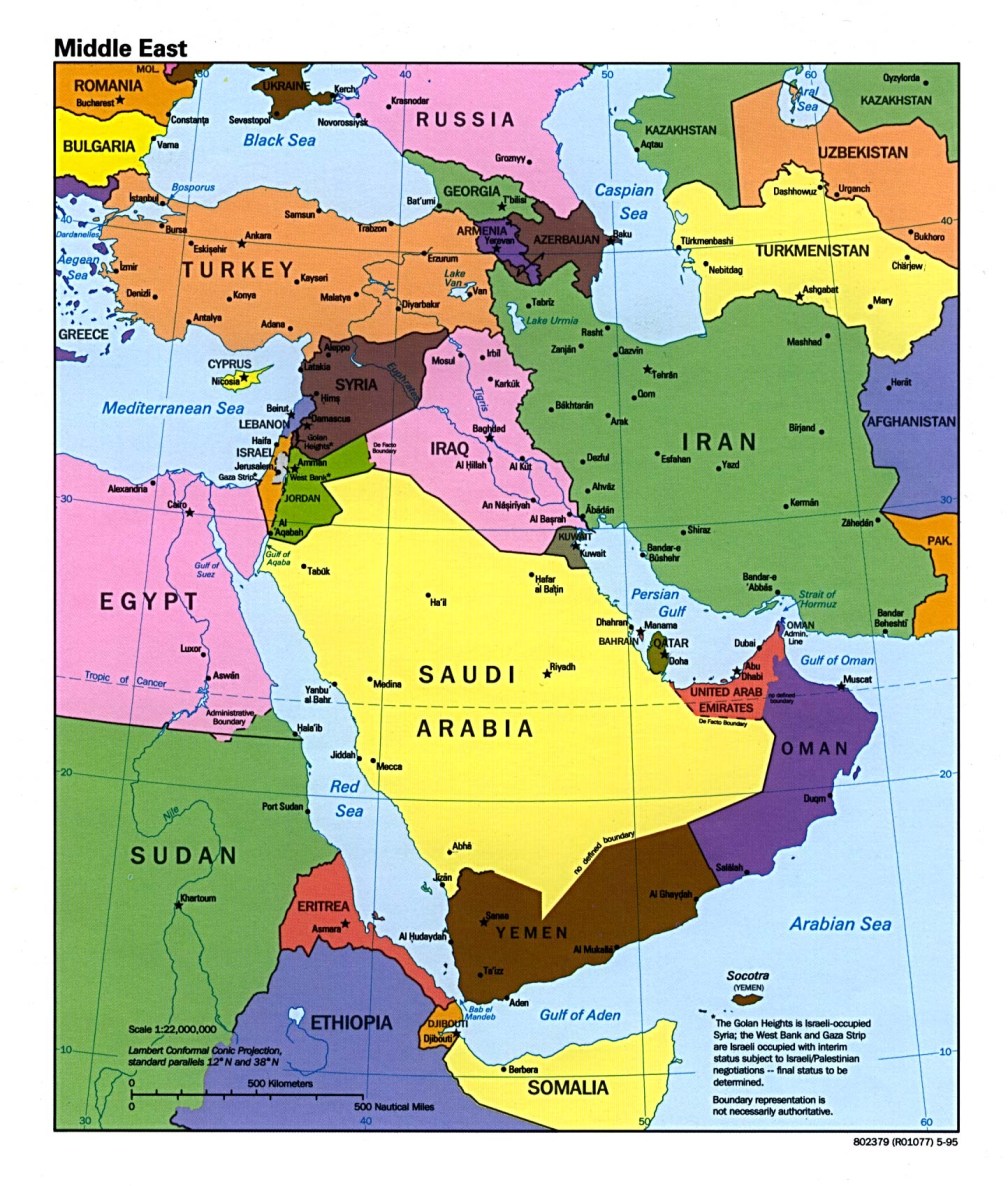
This is significant because the American Government and Western Governments believe Mr Assad is part of the problem and want him to leave power. Looking at the map of the Middle East, you can see it would be most prudent to have Syria on Iraq’s side. And in fact they have been alongside Iran and heavily Iran backed Lebanese group Hezbollah since the Syrian Civil war began in March 2011. IS now controls territory stretching from Iraq’s Diyala province to Syria’s Aleppo.

The Syrian Civil war’s origins can be traced back to their worst ever recorded drought in 2006-2011. It’s a country roughly the size of Spain with only a quarter of the land being arable and had a population of 23 million people at that time. Syria is the home of many religions including Christian, Alawite, Druze and Kurdish minorities, it’s majority is made up of Sunni’s (orthodox Muslims). Alawite’s like Mr Assad consider themselves the chosen people like Jewish people but Sunni’s see them as heretics. With the population and resource ratio already out of balance the drought devastated agriculture, farmer’s livelihoods and livestock affecting 1.3 million rural people. Hundreds of thousands of farmers abandoned their farms and fled to already bursting at the seam cities and towns, in search of non-existent jobs and food that was already scarce.       

The Middle East has long used subsidies as part of domestic economic policy, in particular bread and energy. Subsidised goods and services are offered as policy for political passivity. The availability of subsidised bread is a large part of their safety net. Rising food prices and a decision to cut fuel subsidies further increased pressure on food prices.The decision by Mr Assad’s Government to sell most of it’s wheat reserves, when prices were sky rocketing in 2005 further worsened the situation.

By November 2008 the senior UN Food and Agriculture Organization representative in Syria turned to the USAID program for help warning that Syria faced “social destruction”. The Syrian minister of agriculture had also “stated publicly that [the] economic and social fallout from the drought was ‘beyond our capacity as a country to deal with.’” His appeal fell on deaf ears: the USAID director commented that “we question whether limited USG resources should be directed toward this appeal at this time,” according to a cable obtained by WikiLeaks.

Syria is very dependent on it’s oil (which is poor quality, sour and expensive to refine) and agricultural sectors and drought coupled with the Government’s bad decision to sell most of it’s emergency wheat reserves in 2005, meant the Government’s self-sufficiency policy had failed. It had to begin importing wheat for the first time in 40 years to keep feeding it’s people.

The civil unrest in Syria began on March 15th 2011, when a small group of angry, hungry former farmers protested against the Government’s failure to help them. The Government’s reaction was swift, violent and uncompromising leading to further rioting around the country that the military couldn’t quell. In the following months violence between protestors and security forces led to the militarisation of the civil conflict. Mr Assad’s opponents are reported to be moderate Syrian Sunni rebels but now consist of hundreds of disparate rebel extremist groups and Islamic militant organisations, that rely heavily on foreign fighters from all around the world. These groups are called brigades and some observers believe there are over 1,000 numbering some 100,000 fighters.

Abu Bakr al-Baghdadi, the self-proclaimed Caliph of IS began sending Syrian and Iraqi IS members who were experienced in guerilla warfare across the border to Syria to set up an organisation in August 2011.

Sanctions on Syria actually began in 1979 when America classified it as a state sponsor of terrorism and most US aid was cut. When Mr Obama called for Mr Assad to resign in August 2011 further sanctions included were; all assets of the Syrian Government frozen, US citizens prohibited from doing business with the regime and banned imports of Syrian petroleum products. In 2013 US Secretary of State John Kerry, allowed a partial waiver of sanctions to allow the export of commodities and civilian technologies, including equipment for agriculture, infrastructure and oil production to rebel controlled areas.

In October 2011 China and Russia vetoed the European-drafted security council resolution condemning Syria. They didn’t want to further isolate Syria believing there was room for dialogue and diplomacy and thought the draft would only encourage divisions.

Middle East Governments responded with the Arab League suspending Syria’s membership and imposing economic sanctions in November 2011, unprecedented moves by the 22 nation bloc. Arab Governments including Gulf states such as Qatar and Jordan have been providing arms and money to moderate Syrian rebels. This has generated controversy that these actions have in fact contributed to the radicalisation of fighters and the rise of extremism.

The European Union (EU) placed similar sanctions to the US in November 2011, it also included travel bans, embargoes on equipment that might be used for “internal repression”, or communications surveillance, and restrictions on importing Syrian oil and exporting oil-production equipment. It eased restrictions in April 2013 allowing the import of ‘crude oil’ from Syrian opposition forces to help them boost their finances. In June 2013 large parts of the EU arms embargo in Syria were lifted to allow the supply of arms to rebel forces in Syria. In July 2013, Hezbollah was declared a terrorist organisation by the US and the EU. Hezbollah came about during the 15 year Lebanon civil war in the aftermath of Israel’s invasion and occupancy, it is heavily financed and supported by Iran, and an ally of Syria and is more powerful than the Lebanese army. Israel is still legally at war despite a ceasefire in 1974, with Syria after Israel occupied 1,200 sq km of Syrian territory known as ‘Golan Heights’ in 1967. In 1981, Israel proclaimed it had annexed the territory by moving 20,000 settlers there. This is not recognised by America or the states.

For our time line, on the 15th December 2011, US Defense Secretary Leon Panetta officially declared the Iraq War over, with a flag lowering ceremony in Baghdad.

During the time of Mr Bashar al-Assad’s Government the interpretation of Islam had been undergoing profound change not just in Syria but in many other areas of the world. In particular affected by policies of foreigners were young men and women from Iraq, Iran, Afghanistan, Libya, Chechnya, Chinese Turkestan (now Xinjiang) and Egypt. Millions of Sunni Muslims throughout Africa and Asia have found inspiration in Sayyid Qutb’s writings. He was the leading member of the Egyptian Muslim Brotherhood in the 1950’s and 1960’s and hanged in 1966 for plotting the assassination of Egyptian president Gamal Abdel Nasser. He is also known as an Egyptian author, educator, Islamic theorist and poet and the father of modern Islamist fundamentalism.

Qutb was the most influential advocate in modern times of jihad, or Islamic holy war, and the chief developer of doctrines that legitimise violent Muslim resistance to regimes that claim to be Muslim, but whose implementation of Islamic precepts is judged to be imperfect.        

Many began to feel disenfranchised with their Governments whether they were favourably Muslim aligned or not, they also found modern compromises to be Western based and religiously unjustified. Juxtaposition that with areas under non-Muslim rule like Chechnya feeling oppressed, Qutb’s denunciation of Westerner’s spirituality and crass materialism alongside discrimination in Christian lands and you get tens of thousands of young foreigners flocking to Syria to fight for what they see as a religious obligation known as fi sabili’llah. 

The Syrian war is not a fight between democracy and the regime, it has turned into an extremist religious war, based on misinformation in a hotbed of foreign invested interest, that has spiraled out of control with IS capitalising on the situation.

Over in Turkey there have been moves to carry out a fundamental revision of the Hadith, the second most sacred text in Islam after the Koran.

The Hadith is a collection of thousands of sayings reputed to come from the Prophet Muhammad.

Some messages ban women from travelling without their husband’s permission… But this isn’t a religious ban. It came about because it simply wasn’t safe for a woman to travel alone

Fr Felix Koerner, a Christian theologian who has observed the project, says some of the sayings – also known individually as “hadiths” – can be shown to have been invented hundreds of years after the Prophet Muhammad died, to serve the purposes of contemporary society.

“Unfortunately you can even justify through alleged hadiths, the Muslim – or pseudo-Muslim – practice of female genital mutilation,” he says.

Grand Mufti Shawqi Allam, the head of Egypt’s Dar al-Ifta has called for Western media to stop calling IS extremists “Islamic State” militants but “Al-Qaeda Separatists in Iraq and Syria” (AQSIS) because the extremists are “far from the correct understanding of Islam.” He also has an online campaign that is tackling the extremist idealogy of Islam militants in Iraq and Syria and “to reflect that Muslims are against their practises.”

With the US plan of ‘training and equipping’ vetted Syrian rebels being sent to the US senate to be approved last week many Republicans and Democrats have expressed reservations about the ability to identify moderates in a country awash with rebel formations and shifting alliances.

Iran has criticised US efforts. Supreme leader Ayatollah Ali Khamenei has said he personally rejected an offer from Washington to engage in talks with Tehran over how to fight the group. He also said –

“They brought together 30, 40, 50 countries and couldn’t do a damn thing against Syria. It’s the same with Iraq. They don’t want to do anything serious. The actions taken against [IS] and what broke the back of [IS] was not the work of Americans. They know this well. [IS] knows this well. The people of Iraq know this well as well. They know that it was the work of the people of Iraq. It was the work of Iraq’s military. They learned how to fight [IS] and it will be them who attacks [IS].”

He continued, “America wants to find an excuse, so that what happened in Pakistan, that with an established government and a strong army — Pakistan’s army is a strong army — without permission enters Pakistan, bombs wherever it wants, wants to do this in Iraq and Syria. They should know [if they do] such a thing, the same problems that came about for them in the last 10 years in Iraq will come about again.”

France has firmly said that they will only carry out air strikes in Iraq only, it will send special forces to help direct and train armed forces and has already provided arms to Kurdish forces in the North. Saudi Arabia is expected to host training camps for Syrian opposition groups vetted by the US.
Australia is currently on board as a “humanitarian mission with military elements.” Take note of the language being used.  Interestingly one of the first things that the Abbott Government did was to cut foreign aid. Iraq’s was cut from $16.7m to $3.7m and after the last budget it was $0. In January this year the Department of Foreign Affairs and Trade (DFAT) defended the cuts “Australia is phasing out development assistance to Iraq in response to Iraq’s growing capacity to finance its own development through increased revenues from oil production,” a spokesperson told New Matilda at the time.

Now it is estimated that we will be spending $500m a year to deploy up to 8 RAAF Super hornet combat aircraft, an early warning and control aircraft, and an aerial refuelling aircraft and a special operations task group of military advisers to assist Iraqi and other security forces fighting IS.

In May 2014 Russia and China joined forces again to veto the draft UN resolution calling for the Syrian crisis to be referred to the International criminal court.

The Syrian elections were held on the 3rd of June 2014, it was the first multi candidate election in decades. It was an election victory for Mr Assad however the EU and America have dismissed the election as illegitimate. The people have put their trust in Mr Assad to end the fighting and to stabilise the country. America and other Western countries providing arms and training to Syrian rebels with the rise of IS won’t provide this.

Although these elections were held in the midst of a civil war, and some margin of error may be plausible, nearly three-quarters of Syria’s population of eligible voters participated. The polling was overseen by international monitors and was uninterrupted by major incidents of violence. There is substantial photo and video evidence that show Syrians voting en masse, and the outcome clearly reflects public opinion.

The media focuses on the IS group’s brutality and not many have asked how it governs the territories that it now controls. We have to remember that IS considers itself Islamic state ‘building’ not just another terrorist group. So how did an underground terrorist group become the new global face of jihad? It’s not just the illicit funding, well trained soldiers and clever use of social media but social services and in one word, bread.

IS published a pamphlet promoting such social services as distribution of water, collection of charity funds, electricity installation and bread. The pamphlet highlight’s it’s efforts to “manage bakeries and mills to ensure equal access for all.” it also describes plans to plant and harvest wheat in coming years. It’s bread-distribution operation to starving Syrians in the midst of war and chaos is also winning hearts and minds. Food security is continuing to deteriorate with fields and farming assets destroyed and 2013-2014 wheat forecasts down 20% from last years harvest.

The threat that IS made after beheading Steven Sotloff is clear “We take this opportunity to warn those Governments who have entered this evil alliance with America against IS to back off and leave our people alone.”

In March 2004 the then Australian federal police chief, Mick Keelty said of the Madrid train bombings “If this turns out to be Islamic extremists responsible for this bombing in Spain, it’s more likely to be linked to the position that Spain and other allies took on issues such as Iraq.” His comments were criticised by Howard Government ministers at the time but his view was later backed up by testimony to Britain’s ongoing Chilcot inquiry into the 2003 invasion into Iraq.

The director general M15 from 2002-2007 Baroness Eliza Manningham-Buller told the inquiry that there were indications that Britain’s involvement in Iraq had “radicalised, for want of a better word, a whole generation of young, some British citizens” who “saw our involvement in Iraq, on top of our involvement in Afghanistan, as being an attack on Islam”.

“Although the media has suggested that in July 2005, the attacks on 7/7, that we were surprised these were British citizens, that is not the case because really there had been an increasing number of British-born individuals living and brought up in this country, some of them third-generation, who were attracted to the ideology of Osama bin Laden and saw the west’s activities in Iraq and Afghanistan as threatening their fellow religionists and the Muslim world; so it undoubtedly increased the threat,” Manningham-Buller told the inquiry in 2010.

Between 60 and 70 Australians are believed to have joined IS in Iraq and Syria out of an estimated 12,000 foreign fighters from 74 countries have gone to fight with rebels in Syria (60-70% from Middle Eastern countries and 20-25% from Western countries). Mr Obama is hosting a special sitting with the UN Security Council this Wednesday, focusing on the IS foreign fighter threat which Mr Abbott will be attending. He is to personally address the council and to vote in favour of a US-drafted resolution mandating a global crack down on foreign fighters. It is believed the resolution will invoke Chapter 7 of the UN Charter, which allows it to impose sanctions or authorise the use of force against nations that don’t abide by it. It will be interesting to see Iran, Russia and China’s response.

The biggest anti-terror raids in Australian history, in Sydney and Brisbane last week orchestrated by the Australian Federal Police (AFP), used preventative orders for the first time to detain people without charge. The orders can be used when there is an imminent threat of a terror attack and can last between 48 hours and 14 days. Interestingly it is the first time the orders have been used since being introduced after the 2005 London bombings. What’s also interesting is the timing after raising the terror threat level with nothing imminent on the horizon and several days later we have Australia’s biggest counter-terror operation taking place in Queensland (QLD) and New South Wales (NSW) in Sydney.

These raids were preceded by a Logan Islamic centre raid in QLD where Omar Succarieh, a 31-year-old Kuraby resident was arrested for allegedly providing funds to Jabhat al-Nusra an extremist group akin to IS, and planning to enter Syria to engage in hostile activity. Mr Succarieh is believed to be the brother of Ahmed Succarieh, who allegedly became Australia’s first suicide bomber in Syria last September. A second man was arrested, Agim Kruezi, and he was charged with preparing for insursions into a foreign state, recruiting persons to join incursions into a foreign state and possessing shortened firearms and explosives.

Jabhat al-Nusra believes the fight against the Syrian regime is supported by religious texts or hadith, and its fighters hope to fulfill ‘God’s wish’ for an ‘Islamic caliphate’.

The recent Sydney raids were carried out at dawn by more than 800 officers in north-west NSW with 25 search warrants where 15 people were detained, 2 people were charged and 9 were later released. One man, Omarjan Azari, 22, appeared in Sydney central court last Thursday afternoon to face charges of preparing to commit a terrorist act. There has been much conjecture but the alleged plot was to behead a random member of the public, somewhere like Martin Place and video it for IS’s media unit to release publicly. Mohammad Ali Baryalei, reportedly Australia’s most senior IS leader allegedly ordered Mr Azari to do it and the AFP intercepted the call. Mr Azari’s lawyer said the allegations against Azari were based on “one phone call”. The case was adjourned until November 13 and Mr Azari will remain in custody.

The hungry media were not just informed but invited to the raids with police helpfully providing video footage and photo stills to the media. One has to wonder at the genuineness of the cone of silence surrounding the likes of Border Security and Immigration and the broadcasting of national security efforts complete with night vision from a police helicoptor. The raid footage could be used as further evidence of Muslim oppression and further aid the IS recruitment of foreign fighters. There has been evidence of this in India, the US and globally where images of raids and people being rounded up are used to recruit more people to the cause and further alienate them.

It’s remniscient of AFP raids last year when Craig Thomson (former Labor minister) was arrested while Mr Abbott was speaking at the Press Club interrupting Mr Abbott’s otherwise dull speech. Seven plain clothed police, not five as was widely reported at the time, from NSW and Victoria arrested Mr Thomson at his electorate office for fraud charges. The only forewarning that he got was a Channel 7 crew setting up outside his office earlier that morning by the time police arrived there were estimates of up to 10 camera crews.

The previous largest counter-terrorism operation in Australia was Operation Pendennis in 2005 when 13 men were arrested over planned bomb attacks in Sydney and Melbourne.

With the ongoing Israel and Gaza war, it’s also worth wondering why the Abbott Government doesn’t have a problem with foreign fighters fighting with the Israel Defence Force (IDF). The IDF comprises of 4,600 foreign fighters known as “lone soldiers”. More than 1,500 are American, with at least 100 Britons and there are a similar amount of Australian’s.

NSW followed QLD’s extra security boosts the day after the raids with Operation Hammerhead, which will see hundreds of officers maintain a highly visible presence 24/7 at locations, including the Sydney Harbour Bridge, the Opera House and surrounding foreshore, and at sporting events and large public gatherings.

Muslims make up just 2.2% of the Australian population according to the 2011 consensus.

It’s been reported today that alleged IS leader Mohammad Ali Baryalei didn’t feel welcome in Australia after 9/11 and changed his name to Ali. Since the raids there has been a string of  anti-Muslim hate crimes such as graffiti on mosques, homes and cars and women in hijabs being verbally and physically attacked. Senator Jacqui Lambie and Senator Cory Bernardi’s ignorant comments on Sharia law and calls for burka’s to be banned only adds fuel to the fire. Haji Sultan Deen says he feels general public animosity towards Muslims was stronger now than it was during 9/11.

“It’s worst than 9/11. It’s usually the women in our families who cop the hatred because they wear the hijabs,” he said. “They’re getting spat on and verbally abused in the shopping centres, even from people who know them.”

The burqa has been banned in France followed by Belgium, Italy, Switzerland, Denmark, areas of Russia and Turkey have  passed similar laws. The European Union (EU) court upheld the ban in France in July this year.

The IS group has called for an attack on soldiers and civilians in Australia, the US and Europe in a fifty five minute recording. IS spokesman Abu Muhammad al-Adnani urged supporters: “If you can kill an American or European infidel – especially the spiteful and cursed French – or an Australian or a Canadian, or any other disbeliever from the infidel fighters … then rely upon God and kill them in any way possible,” al-Adnani said in the speech, which was uploaded to the web as an audio file.

The IS group’s particular hatred of France is most likely due to it air striking IS militants in Iraq.

In another section, the Isis spokesman refers mockingly to Australia’s preparations to send in warplanes and special forces to tackle the terrorist group in Iraq.

“What threat do you pose to the distant place of Australia for it to send its legions towards you?” it says to Isis supporters. “If the parties have gathered against you, then know they gathered against your prophet.”

“The best thing you can do is to make an effort to kill any infidel, French, American or any of their allies.”

“Oh, Americans, oh, Europeans, the Islamic State did not initiate a war against you, as your governments and media try to make you believe,” Mr. Adnani said in the recording, which included an English translation. “It is you who started the transgression against us, and thus you deserve blame and you will pay a great price.”

In a written response provided to some media outlets, Abbott’s office dismissed the claim that Australia was targeted for its willingness to participate in military action in Iraq, saying “these people do not attack us for what we do but for who we are and how we live”.

This latest threat has only bolstered the Abbott Government’s, police and security agencies drive for more powers with anti-terror laws. The new laws are being announced in three stages, the National Security Legislation Amendment Bill (No.1) 2014, Counter Terrorism Foreign Fighter Bill and Data retention legislation. The latter is to be put to Parliament by the end of the year and the CTFFB is to be debated tomorrow. As I write there has been no proper debate as yet.

Senator Scott Ludlam notes again the Senate is now debating a bill that representatives, on their feet contributing, have not yet actually read.

“That is treating us with contempt.”

He says the office of the Attorney-general, George Brandis, said the amendments would be available half an hour ago. They had not yet been sighted when this was published.

A judge granted the preventative detention orders in the supreme court last Wednesday before the raids. A broad non-publication order remains in place over the orders. The judge ruling on the non-publication order said: “The names of the parties to the proceedings, the evidence in the proceedings, including the oral evidence, the affidavit of the plaintiff (sworn 17/9/14) and the judgment delivered on 17/9/14 are not to be published to any person except as required to comply with any provisions of the Terrorism (Police Powers) Act 2002.”

The ruling is very unusual with no date of expiry allowing the details to be reported, sunset clauses are set to be extended for 10 years when they were set to be abolished too. Widening Australia’s Security Intelligence Organisation (ASIO’s) powers for computers and networks; intelligence leaks and the publication (whistle blowing) of those leaks; and allowing ASIO agents to use force during operations will achieve what exactly? The recent counter terror raids were successful, may be not as cost effective as they could have been with 800 officers and only 1 detainee still in custody but nonetheless. There is to be biometric E-gates to process arrivals at all air and sea ports next year, and discussions to be had at the G20 in regards to countries sharing intelligence and IS. And let’s not forget our oft touted strong borders, how can these  ant-terror laws help national security further? I hope these questions will be asked by the opposition when they debate this and that they don’t just blindly accept the Government’s legislation.

It’s time that Australia was not regarded as the young, wet behind the ears, rich foreign cousin that you call on when you need a bail out. Let’s say the West rid the world of IS, like we did Saddam Hussein and Osama Bin Laden, then what? Syria can’t get ahead economically with having to spend on National security and the vested interests of the wealthy who occupy political positions of power, let alone now being attacked with American air strikes and climate change only bringing more drought. Who will be there to rebuild homes, businesses, fractured psyches and disabled bodies not only in Syria but Iraq and Turkey where unprecedented numbers of refugees are spilling into with Turkey battling to keep Turks in that want to go over to Syria and fight? It would be better for Australia to help out this situation in a humanitarian sense by upping refugee numbers, increasing aid from zero at least and for a set amount of time, and providing food and agricultural assistance and education.

With Mr Abbott saying “None of us want to get involved in another Middle Eastern war but it is important to do what we reasonably can to avert a potential genocide” he needs to back it up with opening our doors to refugees fleeing genocide not only from there but other countries too such as Sri Lanka.

Now about that budget…