Australia has lost its identity

united-corporations-states-of-america-map

The Australian cultural mindset has been eroded and is becoming predominately American. The size of the American population and its dominance in movies, television and music meant that influence was inevitable and it’s reflected in our fashion and in language with words such as “like”, “bro” and phrases along the lines of “you go girl”. American cultural imperialism has only exacerbated since Australia signed the American free-trade-agreement (AUSFTA) in 2004. Australia is losing its cultural identity. The Indigenous Australian culture actually has more in common with Australian culture than many may realise. The love and affection for Australian land is evident when so many Australians spend their time off from work and on holidays to do such things as swimming, sun baking, surfing, yoga, meditating, mountain climbing and hiking.

Australia’s history with Indigenous Australians is also not what many may realise with slave labour, stolen wages and stolen federally paid maternity allowances and child endowments from their trusts. Indigenous Australians not only built the pastoral industry for Australia but they also helped build it in other ways with wage, labour, allowance and endowment theft. They also worked in a wide range of occupations: interpreters, concubines, trackers, troopers, servants, nursemaids, labourers, stock workers and pearl divers. What is also overlooked is that they are the oldest living culture on earth with many achievements starting to come to light such as, superfoods knowledge, being the world’s first bakers and perhaps even being responsible for the world’s oldest astronomical map.

Australian television in the eighties and nineties is markedly different today with the likes of comedy shows such as The Comedy Company, Fast Forward and Full Frontal now fond memories. The reality television show Big Brother, began on Australian screens in 2001, along with a plethora of American shows such as Sex in the City, Law and Order and CSI. Many Australians including Indigenous have been raised subconsciously or subliminally with an American belief or values system. Calls get made to the American emergency number 911 rather than our own national emergency number 000 and “product dumping” is the norm with American businesses selling their television shows in the Australian market for below local cost or production prices. With an American population of around 325 million, it’s a lot easier to recoup your production and overall costs and it means that sales to other countries are essentially pure profit for America. This makes it harder for local industry to compete and it takes away any incentive to innovate or foster local production and talent. It also creates a deficit in our creative knowledge economy preventing innovation at a local level. More funding and tax breaks are needed to bolster confidence and to transition our creative knowledge economy for the future.

Between 1996 and 2000 Australia’s royalty trade deficit (including Information and technology) with America, increased by 84 per cent. In the book How to Kill a Country by Linda Weiss, Elizabeth Thurbon and John Mathews, they suggest an Intellectual Property Right (IPR) tax. They argue that governments have always taxed property as a principal source of avenue, so why not tax royalty flows? This book was written twelve years ago so it would be even easier for the government to look at royalty flows data and to put even a modest tax on it. For example, if Australian businesses paid royalties of AU$1 billion, the government could collect say 10 per cent or AU$100 million and use the revenue to reinvest locally.

Forced control over Indigenous Australian’s wages and savings (bank books) only ended in 1972 and they didn’t receive equal wages until 1986. Despite stolen wages, slave labour and stolen benefits they have fought wars for Australia without recognition and thanked only with discrimination when they got home. They have been portrayed as nomadic, hunter-gatherers but evidence shows that they were actually Australia’s first farmers.

Grindstones that are 36,000-years-old have been discovered in New South Wales (NSW), they were used to turn seeds into flours for baking. The Gurandgi Munjie collective is made up of a number other Indigenous Australians living along the NSW south coast and in east Gippsland in Victoria. They’ve been trialling native millet, kangaroo grass and murnong crops to increase harvests and begin selling bread soon. “One of our aims is to make sure our people earn a living out of it, as well as helping Australia learn about a natural Australian diet.” Murnong – is also known as yam daisy and is a tuber that can be eaten like a vegetable, the seeds of millet and kangaroo grass make up the healthy, gluten-free flours. Pascoe of Gurandgi Munjie’s baking experiments, says: “Kangaroo grass flour has got a really beautiful smell and a nutty flavour. We love making the breads simply because it tastes so good, but also because it makes the kitchen smell good as well.” And that “Environmentally it’s a pretty good deal,” says Pascoe. “They’re perennials, so once you get your crop established you don’t have to plough the land again or add fertiliser or pesticide. Your CO2 emission levels are going to drop dramatically because you’re not turning the soil over and releasing carbon into the atmosphere.”

Marnybi, Gugbinge, Kakadu plum, bush or billygoat plums have the highest natural vitamin C content in the world and can be found in abundance in Wadeye, the Northern Territory (NT). For Indigenous Australians it’s known as traditional Indigenous medicine. A local Wadeye woman explains: “It’s good for your headache. If we have headache at bush, we eat plum and it makes us feel good.” It is considered as a gift from the Dreamtime. It has taken off commercially as a powder for smoothies and to be sprinkled on to breakfasts as well as a good source of folic acid, iron and may even protect against Alzheimer’s disease. With this success comes bio piracy which locks up intellectual property around bush foods. Bush foods’ intellectual property is already being largely exploited by companies and individuals that are patenting intellectual property of native plant knowledge. Multinationals can come in and patent the use of products with little consideration for knowledge or history. The Northern Land Council is calling for a blanket moratorium on all patents over native foods and plants until a legal framework protecting Indigenous interests can be enforced. Andrew Forrest has been making noise again recently about a “premium” Australian brand to woo China, wouldn’t it be prudent for Indigenous Australians to have their own?

Australia may be home to an ancient astronomical stone formation that could be older than Stonehenge. The Wurdi Youang stone arrangement 45km west of Melbourne was formed using 90 blocks of basalt and clearly depicts the equinox, the winter solstice and the summer solstice. The Wathaurong people are the traditional owners. Geologists and experts have estimated it to be around 10,000 years-old, or 3,000 years older than the 7,000 year-old Stonehenge. They used the sky to help them work out weather patterns too and shared this knowledge with one another through song and dance, for example, if stars are twinkling rapidly it’s because of high-altitude trade winds. Another example is if the stars are twinkling fast and are bright blue, storms are on the way. They use dreaming and songlines as memory techniques to retain vast amounts of knowledge.

Indigenous are being included and recognised as such a lot more with Acknowledgement of Country becoming the norm as well as “Welcome to Country” ceremonies. Just about daily more stories and discoveries like the ones above can be found if you look, you won’t find them often in main-stream-media, but you will find cartoonists like Bill Leak. The social media campaign that followed with #IndigenousDads to counteract the latter’s cartoon was heart warming and shows that there is good will out there for each other. The ABC television show Cleverman also helped to educate and give insight into Indigenous Australian’s culture. Personally, I still can’t get Jesse William’s speech at the Black Entertainment Awards about racism in America out of my mind. In particular the last paragraph: “We’ve been floating this country on credit for centuries, yo, and we’re done watching and waiting while this invention called whiteness uses and abuses us, burying black people out of sight and out of mind while extracting our culture, our dollars, our entertainment like oil – black gold, ghettoizing and demeaning our creations then stealing them, gentrifying our genius and then trying us on like costumes before discarding our bodies like rinds of strange fruit. The thing is though… the thing is that just because we’re magic doesn’t mean we’re not real.”

So much of the Australia that many grew up with and know is gone, owning your own home and endless summers at the beach have been replaced with longer working hours. That is if you can get work and aren’t dealing with underemployment. Now that America and other multinationals are snapping up Indigenous bush foods and medicine patents, I think it’s time that we united and fought for our countries independence from America Inc, it’s a corporation not a country. Call out the main-stream-media misinformation, ignorance and racism when we see it and hear it. Acknowledge the ugly side of Australian history as well as all that we have in common and share this knowledge with others.

Image

We can learn from the asbestos scandal

Asbestos_fibres_resized

Image is from comparethemarket.com.au

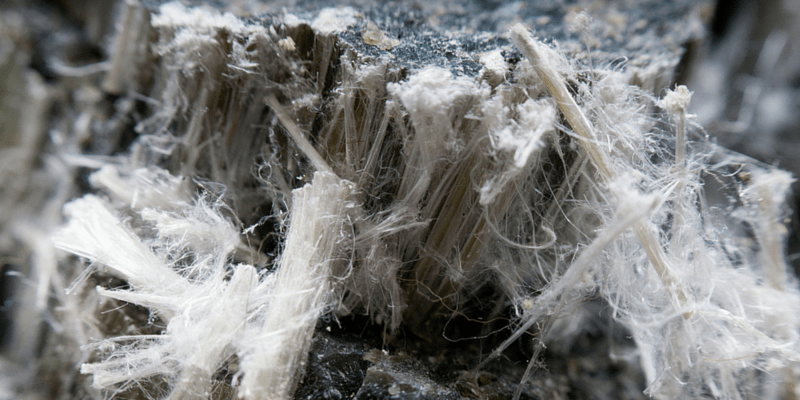
Last week asbestos was found again in imported Chinese building materials, this time it was found at Perth Children’s Hospital (PCH) in the roof panels. In February this year news broke that more than 50 sites across Australia are suspected of illegal asbestos contamination. Asbestos Safety and Eradication Agency CEO Peter Tighe, said that he was aware of 64 sites where asbestos-tainted materials have been used in construction.  “It’s an emerging problem and it seems to be growing exponentially, as more and more products are brought into Australia, because of the wind-down of manufacturing in this country,” he said. “What we’ve really got now is really an indication which could be the tip of the iceberg.” Because importing asbestos has been banned since 2003, Mr Tighe is also concerned about younger tradespeople and said “Our young tradespeople haven’t been trained to deal with these products. They think they’re asbestos free,” and that “It’s really a risk to these individuals, to their clients and to members of the public who might be in the vicinity when there’s cutting, drilling or manipulation of asbestos cement products.”

Independent Senator Nick Xenophon is calling for not just more scrutiny of overseas building products but greater penalties. “This needs a comprehensive approach [which] needs to include Customs doing their job, not just having random searches,” he said. “It needs certification of the supply chain so that if you’re an importer and your product has asbestos in it, unless you’ve done everything possible to check and double check, you should face a potential jail term.”

The panels used at the PHC were supplied by Chinese company Yuanda which also had another scandal to contend with last week, involving asbestos-laden gasket material in Brisbane’s new government tower. In February, Federal Border Protection Minister Peter Dutton, ordered an independent review of asbestos border control management, by KGH Border Services. The review has been completed, but kept confidential. A Senate inquiry [PDF] into non-conforming building products released an interim report in May with illuminating submissions about the Lacrosse apartment fire in Melbourne. The fire was caused by imported Chinese cladding with Mr Adam Dalrymple, Director of Fire Safety, Metropolitan Fire Brigade, describing the incident to the committee as one that alone could have ‘claimed hundreds of lives if things had turned out a little differently’.

“We were probably really lucky that did not happen on that occasion. What we are saying here is that fire safety really should not be a matter of good luck. The fire started on a balcony from an unextinguished cigarette — an innocuous type of thing, you would think. This set fire to the cladding, and the panelling itself allowed the fire to travel the full extent of the building — 23 levels in 11 minutes. That is something we have never, really, seen before. We would say this should not have been allowed to happen.

In 31 years as a fire-fighter and 20 years as a fire safety specialist I have never seen a fire like this — in my lifetime — and I have made it my business to study fires of this nature, so we can get a better outcome for fire-fighters in the community. We have grave concerns about the use of non-compliant product and that it may result in disastrous loss of life, and we cannot tell you when the next event is going to happen. This is a modern building, constructed within the last five years. It has been a valid assumption, up until now, that newer buildings are relatively safe and probably safer than old ones. From a fire services perspective, right now, I cannot guarantee that and I cannot, categorically, state that that is a true fact.”

The Senate interim report said that strengthening enforcement should be a high priority for the Federal Government. “The importation of banned materials, such as asbestos, raises very serious concerns about the capacity of Australian authorities to deal with this issue, particularly in light of our open and dynamic trade environment,” the report stated. The Asbestos Industry Association last year shared concerns that the Australian Border Force (ABF) officials were checking less than 5% of all products coming into Australia. It’s also worth noting that building products are not the only imports tainted with asbestos – children’s crayons and car parts have also come under scrutiny.

The Asbestos Safety and Eradication Agency (ASEA) has stated that regulations on prohibited imports allowed for fines of up to $170,000, but that “such penalties have not been commonly used as a deterrent”. Since 2009, only $64,000 in fines and costs have been collected from asbestos importation offences. ASEA also said: “The agency considers that an increased willingness to enforce the penalties available under the regulations would assist in reducing the incidence of non-conforming building products being imported into Australia,” and they also called for: “increased surveillance and screening of imported building products, with particular attention to those products previously found to contain asbestos.”

The Master Builders Association (MBA) WA said: “In WA, owner-builders are about 10% of the (house building) market,” and MBA executive director Michael McLean said. “That’s a couple of thousand new homes every year. What qualifications do a lot of these owner- builders have in accessing products for their homes? At least a builder has some experience or qualifications to make some assessment in these things. And that: “Because of the internet, builders and members of the public are accessing products from all over the world,” he said.

The Asbestos Diseases Foundation of Australia (ADFA) has asked the Federal government to urgently boost monitoring of imported building products. They say a greater sense of urgency is required in the wake of the asbestos exposure at PCH. ADFA president Barry Robson said “The Customs people used to come down and physically unpack the containers if they were suspicious of anything. Or they would come down and crawl all over that ship and inspect it from top to bottom, you don’t see that anymore, you haven’t seen that for decades. It’s just the lack of controls of imports into this country.” Mr Robson also said that construction companies and governments put too much faith in overseas certification, suggesting it would be better to source locally made products. “These importers should go to the manufacturer in China and make sure that there is no asbestos, if they’re not sure then don’t bring it into this country — have it manufactured in this country where we know there will be no asbestos in these building products.”

The Australian building and construction industry accounts for ~8% of Gross Domestic Profit (GDP) and employs 9% of the workforce. The industry contributed $108.4bn to the Australian economy in the 2013-14 financial year. At the end of the 2014 financial year it had generated $359bn in total income and employed 1,073,000 people. Questions need to be asked as to what is happening with registration fees paid by importers to ensure that their products are safe. They also need to be asked about why only $64,000 has been collected in fines since 2009, considering asbestos has been banned since 2003 and that we are now over half way through 2016.

The Turnbull government wants to reinstate the Australian Building and Construction Commission (ABCC) because it believes the building and construction industry is riven with “militarism and illegality”. The problem is that the ABCC has power in civil matters not criminal matters [PDF], the police do this work. And we already have the Fair Work Building Commission (FWBC) to do this work. Scrolling through the FWBC’s News and Media page on their web site they’ve not been idle with ~$300,000 worth of penalties issued for this month alone. The government relying on old modelling from 2007 stating that productivity grew by 9% under the ABCC, has also been discredited. The Hon. Murray Wilcox QC described the 2007 report as “deeply flawed” and concluded that ‘it ought to be totally disregarded.’ It is from this discredited report that the 9.4 per cent figure of lost productivity is derived [and] it should not be relied upon…”

I agree that we need a tough new cop on the beat just not what for the Turnbull government is claiming it needs to be for. There is illegality going on (including an increase in asbestos dumping) right under everybody’s noses and if left unchecked great tragedies could occur. Profits are not more important than people and for all the talk of “jobs and growth” this could be achieved if we manufactured and procured building products from Australia. Australia is trusted by countries like China for our safety procedures, in particular when it comes to handling food. In 2008 China had a contaminated milk disaster that saw children die and hundreds of thousands of children poisoned by melamine, an industrial chemical used in fertilisers and plastics, that was intentionally used to boost it’s ‘protein’ content. We’ve already had our own Chinese food scare with Nanna’s hepatitis A laced, frozen berries last year. With China’s middle class growing and wanting to improve their lifestyle, we have seen not just our high quality products like powdered baby formula become white gold but honey and vitamins too.

If we can be premium food suppliers, with trusted first class health and safety standards to China, we can become globally renowned for this and our quality control in other industries too. Our future would be much better if we became a nation of creators rather than outsourcing and profiting from the likes of turning a blind eye to health and safety.


Gentrification Creep

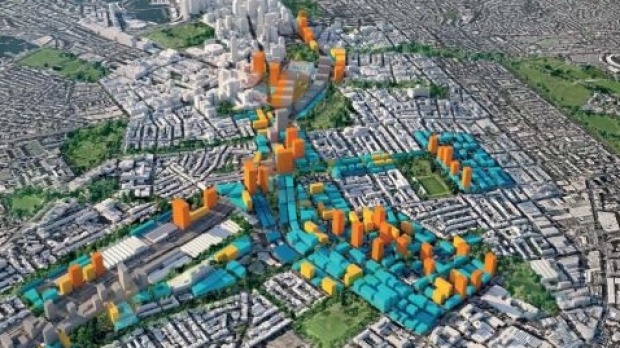
The City of Sydney Council is concerned about the NSW government plans for a 20 and 30-storey tower precinct at the Waterloo housing redevelopment site in Sydney. The Chief Executive Officer, Monica Barone said Urban Growth NSW seemed to be acting as a government planner, as well as property developer. Urban Growth NSW was formerly Landcom but with greater powers and it still has former Liberal leader John Brogden as its chairman. It is a government agency in charge of big new property projects including Rozelle, The Fish Markets, Glebe, The Powerhouse Museum, White Bay and North Parramatta. Urban Growth NSW pushed for the Waterloo station to be built rather than the Sydney University station as a justification to build 10,000 new dwellings while replacing 2,000 social housing units. The reasoning being that the new private dwellings will pay for the social housing dwellings in the area.

The first major public forum for the development was held in February a couple of months after residents were told that their homes were to be destroyed, to make way for a “vibrant new community”. Leaflets were handed out to the crowd but Mr Hazzard didn’t have many answers for them just that: “Everybody here in Waterloo will have the entitlement to come back into their housing, and it will be done progressively over 20 years” to which the room laughed not just once but twice after he was translated in Mandarin and Russia. “Twenty years! We’ll all be dead!” someone yelled from the crowd.

Also in February this year the NSW government issued a tender for Hong Kong style high rises at the new Sydney Metro train stations including Waterloo. Hong Kong’s railway was built by private company MTR in exchange for property development rights in the air space above each station. MTR is part of a consortium that will operate Sydney’s first private railway, the Metro Northwest this contract doesn’t involve air space rights though. MTR has also lobbied the Baird government to adopt its “value capture” modelling for future projects. This involves evaluating the additional land value around urban rail, with the added value paying for the new infrastructure. Or at the very least lowering the construction costs of new infrastructure. The Baird government hasn’t said if property development rights above stations will be awarded in a separate contract to the station  construction. An industry briefing last December however found that there was “significant interest” in property development above stations, especially in the CBD.

RedWATCH is a Waterloo community group meeting and last week Urban Growth NSW attended its first one. Convener of the group Geoff Turnbull said: “People don’t really have a sense of what is being talked about other than they are going to be upset and dislocated.” He also said: “So far people really know nothing more than when it was announced,” and that the entire process was, “callous.” One resident labelled the project as a, “social experiment,” and, “disrespectful to the community.” The master plan is expected by the middle of the year but with an election on July the 2nd, perhaps this will be put on hold until after it. Residents are to start being relocated as of the middle of next year, to where nobody knows yet.

The Greater Sydney Commission officially launched on January 27th this year and is being chaired by Prime Minister Malcolm Turnbulls’ wife Lucy Turnbull, a former Sydney Mayor. Mrs Turnbull is joined by three other “Greater Sydney commissioners”, Environmental commissioner, Rod Simpson, Social commissioner, Heather Nesbitt and Economics commissioner, Geoff Roberts. Mrs Turnbull will essentially have the power to remove local councils as a “relevant planning authority” if needs be and has basically received the formal powers of the Planning Minister. There will be six districts and a district commissioner for each one, four have been appointed with two more to go. “Sydney Planning Panels” (SPP’s) don’t exist yet but there has been much conjecture about them and they’re slated to begin at the end of this year or when the district plans become effective. Not much details as to how much power they may wield as yet or even if they will be put in place.

In Western Australia (WA) though they have something similar called “Development Assessment Panels” (DAP’s). State-appointed DAP’s instead of councils have the power over any Perth development worth over $10 million. SPP’s are slated to be responsible for any capital investment proposals with value over $20 million and proposals between $10-$20 million that have been delayed by more than three months. We can only wait and see further details when or if they are ready but councils in WA are lobbying for DAP’s to be scrapped. Cottesloe Councillor, Sally Pyvis is concerned about communities losing their voice and called on new Planning Minister, Donna Faragher to “clearly outline the true cost to the community, local government and industry of this additional administrative layer”.

The City of Sydney Council managed to survive the NSW government amalgamations as a stand alone Council. If it was merged with Woollahra or Woollahra, Waverley and Randwick, the Super Council would’ve most likely been in control of the Liberal Party. It is financially stable as is the Randwick Council but it was found not to have met the “scale and capacity test for a global city”. Lord mayor, Clover Moore has past experience with a prior amalgamation taking 3-5 years to complete and not wanting a distraction from the current $40 billion building boom in the CBD.

And what of small businesses inconvenienced after being on a property in Waterloo for 100 years like Bragg Printing? It’s being compulsorily acquired and there is nothing they can do about it. The owner Arthur Habib says “The government has watertight legislation, they tell us there is nothing we can do. They have told us we have to be out in six or seven months. We are now in limbo and in the hands of the costly legal system with conflicting information in regard to the valuation of our building and relocation costs, which will be considerable as we have six offset presses, some historical letterpress presses and various finishing equipment. We are not able to make any move until such time that we have some firm figures to work with for a building and relocation.” Mr Habib also said “At first we were delighted when Waterloo was chosen as the site for the station and we all assumed it would be built on the 18 hectares of government land that sits across the road from us in Cope Street. But it turns out the government is doing a land grab from small business at the bottom end of town to on-sell the air space together with its public housing estate to developers in the big end of town.”

The Waterloo redevelopment has had countless studies and reviews over the last 10-15 years, they should be available for the public to view. The lack of community consultation for it as well as forced council amalgamations is troubling in a democratic society. I also question why a Liberal state and Federal government appear to be adding red tape and more powers to the Greater Sydney Commission. We are in disruptive times as it is, now more than ever the public deserves to not only be consulted but to be a part of the decision process otherwise it is not democracy. Decisions in the hands of a few with power, coupled with land grabs and negative gearing gone wild is taking us backwards to a type of feudal system.


Manufacturing is transitioning not dead

In recent days there has been much conjecture as to who let Arrium get into over $4bn worth of debt and the usual blame games & misinformation that is the state of our modern media. Our four largest banks have unsecured loans worth $1bn that are included in this total. Last week the Industry minister & member for Sturt in South Australia Chris Pyne, did the media rounds explaining that the government was doing everything in its power to help Arrium. This included bringing forward a Victorian rail contract worth $80m and a government inquiry into Asian steel dumping in February this year.

SPC Ardmona recently won its anti-dumping case against cheap dumped Italian tomatoes, the Anti-Dumping Commission (ADC) and the Federal Government ruled that two major Italian exporters, La Doria and Feger, had indeed been dumping their produce in Australia. The case was decided on appeal with SPC arguing the ADC had not looked into the huge subsidies the European Union (EU) pays to Italian growers and manufacturers. As a result duties on Feger products 8.4% of the product price, with a duty of 4.5% applied to La Doria products.

Countries in Asia-Pacific produce billions of tonnes of steel and often have excess that they can sell cheaper than what their local domestic markets sell it for. As in the EU some companies engaging in dumping get subsidised via loans and tax concessions giving them extra incentives to continue the practise. While Mr Pyne mentioned protection from steel dumping from countries such as China, Taiwan, Malaysia and South Korea during his rounds he didn’t mention Japan or India. They also dump excess steel and this is of interest because we have recently signed free trade agreements (FTAs) with China and Japan and the government is looking to sign one with India in the very near future.

A senate inquiry about The future of Australian steel this month was told by the ADC commissioner Dale Seymour, that during the last few years the number of steel investigations has increased and represents 75-80% of their case loads. You can see for yourself the current cases before the ADC and what they comprise of here. Mr Seymour also confirmed that 75% of Arrium products were tied up in dumping.

In America last month the government imposed tariffs of 226% on imports of steel from China, with goods from Brazil, India, South Korea, Russia, Japan and the UK subject to duties too. UK steel industry’s largest trade union Community said: “We are drowning in this flood of Chinese imports and the US action will only serve to divert more Chinese steel towards Europe. “Unless the Secretary of State [for Business, Innovation and Skills, Sajid Javid] is prepared to join others in Europe and stand up for our industry soon, the debate will be over as we will have no industry left to save.”

Mr Pyne has backed the Australian Labor Party (ALP) call to mandate the use of Australian steel on government infrastructure projects but South Australian senator Ann Ruston doesn’t agree saying: “I think we need to be mindful of the fact that we are an exporting nation, we have a very small population, we’re not going to get rich selling to ourselves, so we must be very careful that we don’t put in jeopardy our trade arrangements overseas.” Mr Pyne also alluded to future submarine work for Arrium but they make “long steel” products which is mainly steel reinforcing bars and beams for homes and buildings whereas “flat steel” is used for submarine hulls. We have produced our own steel for submarines before with Australian company Bissalloy Steel Pty Ltd producing 8,000 tonnes of it in the 1980s-90s for the Collins submarines with research and development provided by BHP.

International investors are showing a keen interest in Arrium with Flinders University Professor John Spoehr saying he wouldn’t be surprised if a Chinese company was investigating taking it over and that: “We will see various different possibilities unfold over the next few weeks and months as various different global players either look to genuinely invest or they are interested in asset stripping, which is really the last thing we want to see occur in relation to Arrium’s future.”

The New South Wales government procured 6,500 tonnes of steel for $8.3bn from Spain for the Sydney NorthWest rail project a couple of years ago. AWU National Secretary Scott McDine said the decision was a ‘disgrace’ and that: “Australian steel should be used on taxpayer-funded infrastructure projects — that must be the the default position,” “Victoria is building its multi-billion dollar level crossing project with Australian steel, and the South Australian government mandates the use of Australian steel on taxpayer-funded projects.” 

“The NSW Government should hang its head in shame for rejecting Australian workers in Whyalla in favour of Spanish steel.”

AWU Acting SA Branch Secretary Peter Lamps said: “The Federal Government created 3000 Spanish jobs that could have gone to South Australia when it handed the contract for two replacement supply ships to Europe this month.” And that: “Every other steel-producing nation in the world has measures in place to ensure local steel is given preference.”

Australia Institute chief economist Richard Denniss has said that a real FTA would be one sentence: “there will be no trade barriers between countries”. This is a fair point to make and with recent events the public is right to question what exactly are in these FTA’s signed in such secrecy and in our names.

The ADC has said it has been laden with steel investigations for the last few years and Arrium and its financial woes have also been known for some time. The big four banks should answer as to why they provided $1bn between them in unsecured loans. And the government needs to explain why it hasn’t acted sooner and whether it was the same reasoning as applied to the near death of SPC Ardmona and the demise of Holden manufacturing in Australia. Manufacturing isn’t dead it’s transitioning and deserves local governments support as well as federal government and some of the profits from our infrastructure and property boom in New South Wales in particular. Australia and its manufacturing infrastructure as well as the jobs that go with them need protecting if we are to make it through the digital disruption unscathed. And lastly a nation surrounded by water that continually sends its manufacturing offshore is not a smart one but a dumb one with all of the knowledge that leaves with it.                  


Image

The NBN is on the wrong path…

1365560982733

Image from smh.com.au

After the coalition won government in 2013, the then Communications Minister and now current Prime Minister of Australia, Malcolm Turnbull promised that every Australian would have access to the National Broadband Network (NBN) by the end of 2016. This clearly won’t be happening and it’s understandable with such a large piece of infrastructure to get your cost projections wrong (including old Australian Labor Party (ALP) figures). Tasmania was to be the first state to have the NBN rolled out by the end of 2015, this has now been pushed out to September 2018. The coalition’s NBN main points of difference with their plan compared to the ALP plan was to roll it out sooner, with faster download speeds and cheaper.

The original budget for the government’s version of the NBN, which is a mixture of technologies and favours FTTN (fibre to the node) over FTTH (fibre to the house) was $29.5 billion this has blown out to $56 billion and counting. Now news is coming out from the less than 15% of Australian’s that do have the NBN, that it’s providing speeds less than the days of dial up or their ADSL2+.

Mr Bell, of Belmont North near Lake Macquarie, New South Wales lays the blame squarely at the feet of Malcolm Turnbull. He says:“My children are becoming cynical about promises made by…the Prime Minister about the fast FTTN NBN roll out. Could you please make enquiries of the appropriate officers or Ministers, as to whether the FTTN NBN will provide a worse service compared to the ADSL+2 it is replacing? At the moment that seems to be the case.”

Mr Alderton also lives in Belmont and is suffering the same challenges, He says:“What a joke, peak times download speeds around 4 Mbps, that’s less than my old ADSL2.”

Mr Wallace of Valentine, near Newcastle, thinks that the problem might be widespread. He says:“There are serious problems with the rollout across Newcastle due to the Fibre to the Node model used here…thinking about switching back to ADSL2+.”

There has been much talk about the copper wire network and how much of it needs replacing to achieve Mr Turnbull’s MTM (multi-technology mix) version of the NBN instead of the ALP version with optic fibre cable. Let’s not forget either that the ALP government had already paid Telstra $11.2 billion to essentially decommission the copper and HFC (hybrid-fibre-coaxial) networks. A figure of $55 million was given by the Turnbull government to replace the copper however a leaked document from late last year suggests a 1000% blowout with the cost being more like $641 million. The figure is so large because it’s for 8.5 million metres of copper of which is enough to lay down between Perth and Pakistan and back again. There has also been Optus HFC network documents leak revealing that the government will need to replace it to achieve it’s MTM at a cost of up to $375 million.   

So far the government and Mr Turnbull have failed in their promises with their alternative NBN. One of the reasons that Mr Turnbull has used in the past for favouring FTTN, is that AT&T also favour it yet they now offer GigaPower which is a complete FTTH network. It previously offered FTTN but it also already had mainly fibre optic cables running for most of the network, with just the last mile or so with copper cables.

It’s pretty clear that a simple roll out of fibre optic cabling replacing the old copper and pay TV networks as you went, would be easier than not only resurrecting old technology but attempting to mix it together. Fair enough if it achieves higher speeds, a cheaper budget and is delivered in a timely manner but it hasn’t to date. It’s bleeding money, yet creating profit for the likes of Telstra and Optus while Australian’s that do have the NBN are now worse off than what they were to begin with. A truly connected Australia would surely inspire further innovation and instead of the focus being on the cost it’s about time that it was looked at as an investment. An investment in the future of the people of Australia.