Cambridge Analytica arrives in Australia

Cambridge Analytica (CA) has boasted that their psychometric data methods helped win the Brexit campaign as well as the successful election of President Trump. CA registered in Australia before several state elections and before the federal election last year. It hasn’t lodged any financial disclosures as yet in Australia. CA has registered an Australian office at a property that is currently being redeveloped in Sydney, in the beachside suburb of Maroubra. The CEO of CA, Alexander Nix and their Head of Product, Matt Oczkowski have been in the country this week for ADMA, as guest speakers at a data analytics conference. They will also be meeting with Liberal party officials for a dinner tonight, including the veterans’ affair minister, Dan Tehan.  

In 2008 when Dr David Stillwell and Dr Michal Kosinski were students at Cambridge University’s Psychometrics Centre, they launched a Facebook application called MyPersonality app. The research focused on five personality traits known as OCEAN:

Openness (how open are you to new experiences?)

Conscientiousness (how much of a perfectionist are you?)

Extroversion (how sociable are you?)

Agreeableness (how considerate and cooperative are you?)

Neuroticism (are you easily upset?)

They asked Facebook users psychometric questions such as these as well as psychological questions. This was done with a test called “The Big 5 test” and they asked users permission to use their Facebook profiles for their research. Users were given their personality profile in return and forty-percent of users agreed to share their Facebook profile data with them.     

They expected maybe a few dozen users to fill in the questionnaire but they ended up getting over a million responses. Their data set combining the psychometric scores with Facebook profiles was the largest ever to be collected. Over the next four years they measured the OCEAN data and compared these with other data points such as Facebook “likes,” content shared and where they lived. In 2012 Dr Kosinski reported that with the data of 68 “likes” he was able to predict things such as whether the user was a Democratic or Republican supporter, with 85% accuracy. With constant refining and testing of this model Dr Kosinski was soon able to evaluate a personality with just 70 Facebook likes, learning more about the person than what the person’s friends knew about them. A couple of weeks after this Facebook changed “likes” so that they were private by default. This doesn’t stop data collectors, many apps and online quizzes today still requiring access to your private data before you can even take the personality tests. If you want to evaluate yourself based on your Facebook “likes,” I have provided links at the end of the article for Dr Kosinski’s website and a link for an OCEAN questionnaire. The original project has finished as such but it is still open for research, you can even find Monash university from Australia on there as a collaborator.   

Dr Kosinski realised that it wasn’t just about Facebook “likes” or even Facebook but that we also reveal things about ourselves when we’re not online. Our smartphone he concluded, is in itself a psychological questionnaire that we are constantly filling out, both consciously and unconsciously. He worried what his research would mean in reverse and that essentially he had invented a people search engine that could possibly cause harm, rather than the original intentions of psychological research.

In 2014 Dr Kosinski was approached by a lecturer from Cambridge University’s psychology department. Dr Alexsandr Kogan, on behalf of a company called Strategic Communication Laboratories Group (SCL) wanted access to the MyPersonality app. SCL was founded in 1993 by Nigel Oakes, a former Saatchi & Saatchi ad man with a penchant for psychology and behavioural profiling. He also established the Behavioural Dynamics Working Group to understand and potentially change people’s opinions in 1989. SCL has been involved in elections in Africa, Asia, The Middle East, Europe, Latin America and The Caribbean. It has also worked for the UK Ministry of defence, the US state department, Sandia and NATO. It states on its websites that its methodology is approved purely because of its involvement with the latter, not anything to do with their success rate or ethics. Cambridge Analytica (CA) is an offshoot of SCL and was founded in July 2014.            

In the nineties, Mr Oakes employed two respected psychometrics professors, Professor Adrian Furnham and Professor Barrie Gunter. Both psychologists say that they were used by Mr Oakes to build credibility for his group. ‘I believe he is inappropriately using my name and reputation to further his career. He was unreliable and Prof. Gunter and I severed links with him’, Prof. Furnham wrote in an email. Prof. Gunter went further: ‘Adrian and I were  running our own small company providing consultancy services. Nigel made contact with us while he was working for the event division of Saatchi & Saatchi. As far as we were concerned Behavioural Dynamics was simply the name of a company he founded”, Prof. Gunter said. “Nigel didn’t have any qualifications in psychology. To have credibility he needed an association with bonafide psychologists, which is part of the reason that he brought us on board. But we found that no matter how hard we tried to rein him in, he would make all kinds of claims that we felt that we couldn’t substantiate, and that is why we stopped working for him’.          

In 2015 The Guardian reported that SCL found out about Dr Kosinski’s method from Dr Kogan in early 2014. After Dr Kogan was turned down by Dr Kosinski he established his own company called Global Science Research Ltd in May 2014. It also reported that he began working with SCL to deliver a “large research project” in the US. His stated aim was to get as close to every US Facebook user into their dataset as he could. He used Mechanical Turk (MTurk) which is Amazon’s crowdsourcing marketplace, to access Facebook profiles. He recruited MTurk users by paying them around a dollar to take a personality questionnaire that also gave access to their Facebook profiles. He promised that their Facebook data would “only be used for research purposes” and would remain “anonymous and safe”. Some complained that he was violating MTurk terms of service. “They want you to log into Facebook and then download a bunch of your information,” was one complaint at the time. Dr Kogan also captured all of the data of each MTurk users’ friends and at that time Facebook users had an average of 340 friends each.

This data was then used to generate models of their personalities using the OCEAN scale. Within a just a few months dr Kogan’s business partner gloated on LinkedIn that their company “owns a massive data pool of 40+ million individuals across the United States – for each of whom we have generated detailed characteristic and trait profiles”. Dr Kogan was unable in email to explain where all of the data came from as he was restricted by various confidentiality agreements and said that SCL was no longer a client. After Dr Kosinski read the Guardian reports he believed that Dr Kogan replicated his measurement tool and that he had sold it to SCL. Interestingly, Dr Kogan changed his name not long after this and is now known as Dr Spectre.

In November 2015, former Ukip leader and UK politician Nigel Farage, was supporting the “Leave European Union” campaign, he announced that it had commissioned CA to support its online campaign. The results as we know now, is that Britain is leaving the EU. A record number of Google searches shortly after the polls had closed asking ‘What happens if we leave the EU?’ suggests that many people didn’t know why they voted to leave or what the consequences of their vote meant.

Mr Nix describes their marketing success as being based on three elements: behavioural science using the OCEAN model, big data analysis and ad targeting. CA buys personal data from places like land registries, automobile data, shopping data, loyalty card data, club memberships, magazines that you read and what places of worship that you attend. They also use “surveys on social media” and Facebook data. There are data brokers such as Acxiom and Experian in the US for example, where you can get almost any personal data that you desire for a price. If you wanted to know where Indian women live for example, you can just buy it, phone numbers included. CA can then add this data to the electoral rolls of the Republican party alongside their OCEAN and social media data. “We have profiled the personality of every adult in the United States of America-220 million people” Mr Nix boasts. Which was exactly what Dr Kosinski feared.

“They will soon be calling me MR. BREXIT” was a telling tweet by then Presidential candidate, Donald Trump on the 18th August 2016. Robert Mercer is a billionaire that started out financially backing Ted Cruz in the Presidential race but when he fell out of the race he supported Mr Trump to the tune of $13.5 million. He was Trump’s biggest donor. Mr Mercer started out his career with IBM as a brilliant but reclusive computer scientist. He is credited with “revolutionary” breakthroughs in language processing – a science that went on to be key in developing today’s use of artificial intelligence. He later became CEO of Renaissance Technologies, a hedge fund that makes its money through algorithms on the financial markets. Nick Patterson, a British cryptographer, described how he was the one who talent-spotted Mercer. “There was an elite group working at IBM in the 1980s doing speech research, speech recognition, and when I joined Renaissance I judged that the mathematics we were trying to apply to financial markets were very similar.” One of its funds Medallion, that manages its employees’ money is the most successful in the world. It’s generated $US55 billion so far. Mr Mercer also likes to fund such things as climate change denialist think tank, The Heartland Institute and right-wing news site Breitbart News. In fact it was $US10 million of his own funding that enabled Steve Bannon, who is now President Trump’s chief strategist, to set up Breitbart News. Mr Bannon was previously a CA board member and gave up this role as well as his executive chairmanship with Breitbart news upon becoming Trump’s chief strategist. Mr Mercer also has a $US10 million stake in CA.

Mr Nix has explained that most of Donald Trump’s messaging during his election campaign was data driven. CA divided the US population into 32 personality types and focused on just 17 states. They discovered that a preference for cars being made in the US for example, was a pretty good indication that they were a potential Trump voter. Similar tactics were used with gun ownership on the series “House of Cards” in season four. The episode focused on government “terrorism” surveillance data being used to influence gun-toting voters opinions, for their own means.

The Liberal Party federal director, Tony Nutt resigned from his position yesterday on the eve of a report that investigated last year’s dismal Liberal party election campaign. Journalist Byron Kaye, tweeted last night that a week before Mr Nutt quit he told him that the Australian federal government was planning to use ‘Trump’s big data consultant.’ CA had it’s eyes on US government contracts in a quite a few departments, including defense while Mr Bannon was on the board, before the election win. In February SCL or CA finalised a $US500,000 contract with the department of Homeland security, this had been in the works since before the election. CA even offers radicalisation services for terrorists. Former national security (NSC) adviser to Trump, Michael Flynn has also been an adviser for SCL in the past. Mr Flynn has been accused of Russian connections and conflicts of interest. It’s of interest that Mr Bannon has stepped down from his position on the NSC overnight.  

With Mr Tehan attending the dinner tonight and Australia’s defence spend at an all-time high for the next decade, you have to wonder if CA has it’s eyes on Australian government contracts. Let alone what it has to offer the Liberal party in regards to electoral campaigning and staying in power. Mr Nix shrugs off doubters of their data methodology: “We have been doing this for nearly 30 years,” he said. “I suppose if it didn’t work, we wouldn’t still be in business and we wouldn’t still be growing.”        

For those curious about what makes you or your friends tick, or a little bit of insight into your personality, please feel secure in trying the links below:

https://applymagicsauce.com/

https://discovermyprofile.com/

Two weeks in, how does Mr Trump affect Australia?

a-new-banksy-piece-near-t-001

Image by Banksy.

I read with interest an article in The Saturday Paper called Goad of Silence by Mike Seccombe this morning, this led me down into an intriguing rabbit hole into the depths of the internet. Mr Seccombe described how different official social media channels of information, such as the National Aeronautics and Space (NASA) Administration Twitter account were being blocked by the Trump administration. And that “rouge” unofficial Twitter accounts had sprung up in their place such as @RogueNASA, I went to investigate the @RogueNASA account. Besides being impressed by their fund-raising efforts with pins and patches for charities such as Black Girls Code and FIRST Robotics!, I came across a non-descript looking link for a newsletter titled Garrett on Global Health. It was written by Laurie Garrett, Senior Fellow for Global Health Council on Foreign Relations. This nondescript looking link is the most comprehensive report detailing the first two weeks of the Trump Administration that I have come across. Ms Garrett provides analysis of three national security presidential memoranda (NSPMs), presidential statements, Executive Orders (EOs) and provides a list with links below, of nineteen presidential actions undertaken by President Trump between the dates of January the twentieth and the thirty-first of this year.

  1. “minimizing the economic burden” of the Affordable Care Act (ACA)
  2. freezing all regulations
  3. reinstating the Mexico City abortion policy (also known as the global gag rule)
  4. scrapping the Trans-Pacific Partnership 
  5. freezing hires for the federal workforce 
  6. advancing the Dakota Access Pipeline
  7. advancing the Keystone XL Pipeline
  8. expediting environmental reviews on infrastructure projects
  9. promoting pipelines “produced in the United States”
  10. reviewing domestic manufacturing regulation 
  11. increasing border security measures 
  12. eliminating “catch-and-release” strategies
  13. pursuing undocumented immigrants
  14. reevaluating visa and refugee programs
  15. strengthening the military (NSPM 1)
  16. reorganizing the National Security Council (NSPM 2)
  17. implementing a lobbying ban
  18. calling for a plan to defeat the self-declared Islamic State (NSPM 3)
  19. reducing regulations

Out of forty-three top State Department positions, thirty-five were vacant by the second of February. Usually new presidents want to avoid mass resignations and wait until replacements have been found. Mr Trump’s party controls the House and the Senate and his party is most likely to support his choice of Supreme Court nominee. This means that the presidential actions above are expected to be backed by legislation and to become law. As Ms Garrett highlights, this behaviour from a new president isn’t unusual, what is different though is the speed of these changes and the confusion and turmoil that it has brought to the executive branch.

On the twenty-seventh of January Mr Trump signed an EO titled: “Protecting the Nation From Foreign Terrorist Entry Into the United States.” Iran is one of seven countries included in the ban, the other six are Syria, Iraq, Sudan, Libya, Yemen and Somalia. Mr Trump reportedly has business connections with Egypt, Turkey and Saudi Arabia, hence those countries seemingly being deemed as safe. It has been estimated that around ninety thousand people have been affected by this, including an Australian born teenager denied a visa to attend space camp in America because his parents are from Iran. A lawyer for the Justice Department revealed last Friday that around one hundred thousand visas have been revoked since the ban was put in place. A formal dissent memo was signed by over a thousand State Department employees, this is unprecedented in the first month of a new presidency, as well as the record amount of signatures. White House spokesman Sean Spicer has said that he was aware of the memo but warned that diplomats should either “get with the program or they can go.”

There has been concern amongst the scientific community that science data stored on American government websites will be erased. Scientific gatherings to save and store government data stored have been organised by a non-profit group called 314 Action.

“The government has done a great job of collecting and maintaining climate change data on these websites located all across the federal government,” said Shaughnessy Naughton, the founder of 314 Action. “The concern is that the data may no longer be publicly available, and then that they may no longer gather the data. It’s a lot easier to deny climate change when you don’t have data.”

Data Refuge is a public, collaborative project that was established by Penn libraries and the Penn program in Environmental Humanities. Data Rescue events are also being held all around America where volunteers are copying data from government sites and government data bases for safe keeping. After Mr Trump was inaugurated a few agencies restricted the amount of information available to the public. An EPA memo said “no press releases will be going out to external audiences, no social media will be going out … no blog messages … no new content can be placed on any website.”

America has a Whistle-blower Protection Enhancement Act that has been in place since 2012 and by chance the Follow the Rules Act happened to be before “The House Oversight and Government Reform Committee” last Thursday. Legislation strengthening measures related to nondisclosure policies, or gag orders, that restrict the ability of federal workers to communicate with Congress, the Office of Special Counsel (OSC) and inspectors general were approved. “This law has lived up to its name,” said Eric Bachman, OSC’s deputy special counsel. “It has significantly enhanced OSC’s ability to protect federal employees from retaliation.”

An America First Energy Plan was also released shortly after Mr Trump’s inauguration and it contains such phrases as: “Sound energy policy begins with the recognition that we have vast untapped domestic energy reserves right here in America. The Trump Administration will embrace the shale oil and gas revolution to bring jobs and prosperity to millions of Americans. We must take advantage of the estimated $50 trillion in untapped shale, oil, and natural gas reserves, especially those on federal lands that the American people own. We will use the revenues from energy production to rebuild our roads, schools, bridges and public infrastructure. Less expensive energy will be a big boost to American agriculture, as well.”

“The Trump Administration is also committed to clean coal technology, and to reviving America’s coal industry, which has been hurting for too long.” And that “Lastly, our need for energy must go hand-in-hand with responsible stewardship of the environment. Protecting clean air and clean water, conserving our natural habitats, and preserving our natural reserves and resources will remain a high priority. President Trump will refocus the EPA on its essential mission of protecting our air and water.”

The Northern Australia Infrastructure Facility Act 2016 (NAIF) was passed by the Australian Parliament on 3 May 2016, with its headquarters established in Cairns on the 1st July 2016 and it is supported by the Export Finance and Insurance Corporation (Efic). It’s offering $5 billion in concessional loans to encourage private sector investment in Northern Australia. Last Wednesday the Prime Minister (PM) of Australia, Malcolm Turnbull addressed the National Press Club (NPC) and said

“We will need more synchronous baseload power and as Australia is a big exporter we need to show we are using state-of-the-art, clean, coal-fired technology,” and that “The next incarnation of our national energy policy should be technology-agnostic.”

Treasurer Scott Morrison stated after Mr Turnbull’s NPC speech that ‘Coal is a big part of the future under a Coalition Government’ Mr Morrison also told the ABC that he won’t rule out Clean Energy Finance Corporation (CEFC) funding towards clean coal either “It’s the Clean Energy Finance Corporation — it’s not the wind energy finance corporation.”

Last Friday Australian Resources Minister, Matt Canavan, announced that he had opened up the $5 billion NAIF fund for new “clean-coal” power stations. He told ABC AM that “I’ve received some interest over the past week associated with our commitment to build base load power stations, including to support clean coal options”

Mr Canavan also cited a 2012 report by industry consultants GHD, which indicated that clean-coal power stations could be commercially viable in Australia’s north. “Some people might not realise that in North Queensland there is no base-load power station north of Rockhampton and industrial consumers in north Queensland pay often up to double the prices in southern Queensland”

Mr Canavan dismissed comments by AGL and Energy Australia that argued that new power stations would be expensive to build and would require significant public funding. “With all respect to those very eminent companies, we wouldn’t take advice from Coles or Woolworths on whether we should allow Costco for example to come into the Australian market,” Mr Canavan said.

“I am not surprised that existing generators don’t want another large-scale base load power station to come into the market, part in an area like North Queensland where they are clearly making good money selling electricity at very high prices.

“Good luck to them and good luck to them in the market.”

Australian Conservation Foundation chief executive Kelly O’Shanassy, doesn’t agree and said that there was no such thing as “clean coal”. “Every coal-fired power plant is damaging our climate, intensifying heatwaves and bushfires, polluting our air and bleaching coral reefs,” she said.

“Australia needs energy that doesn’t pollute, not energy that pollutes a little less than Australia’s existing coal generators, some of which are among the dirtiest in the world.”

Noting the use of “base load” in the quotes above, I will quote the Minister for Foreign Affairs Julie Bishop, in 2014 “It’s an obvious conclusion that if you want to bring down your greenhouse gas emissions dramatically you have to embrace a form of low or zero-emissions energy and that’s nuclear, the only known 24/7 baseload power supply with zero emissions,” she told Fairfax Media.

A “baseload power supply” is in a nutshell, “continual power supply.”

“I always thought that we needed to have a sensible debate about all potential energy sources and, given that Australia has the largest source of uranium, it’s obvious that we should at least debate it,” said Ms Bishop.

It was reported last week by the Guardian that long term coal industry lobbying for years in Australia, by American and overseas corporations, has put pro-coal talking points naturally into Australian leaders’ mouths.

As John Quiggin wrote in Crikey last month, the only real viable option for clean coal was via a “carbon capture and storage” program or (CCS). The only version of CCS that could be considered commercially viable is when Carbon dioxide (CO2) is pumped into exhausted oil wells. This works best though with a pure source of CO2 such as natural gas rather than a mix of gases from coal-fired boilers. After decades of work and funding spent on CCS technology (including $590 million spent by Australian governments since 2009), there is only one operational power plant using CCS, the Boundary Dam project in Canada.

Even if all of the coal-fired CCS projects listed by the Global CCS Institute in Melbourne as possibly happening by 2030, are included in the total amount of CO2 captured, it would be less than 20 million tonnes a year.

Australia roughly generates this amount of energy in two weeks.

The Turnbull government’s administration, despite the focus of the main stream media on presidential phone calls and name mishaps, appears to be pretty much aligned with the Trump administration. Fred Palmer was the Peabody Energy Vice-President for government relations in 2010 and in the same year that the “Advanced Energy for Life” campaign was born. Peabody Energy Corporation (Peabody) is headquartered in St. Louis, America and it is the largest private-sector coal company in the world. Peabody has been developing, refining and honing its campaign tactics ever since. Mr Palmer describes former Australian PM Tony Abbott, as a “precursor” to Trump in the context of climate change and energy policy.

“When Tony Abbott came in, he came in running against the carbon tax. When Donald Trump came in, he came in running against the Clean Power plan. That’s the parallel I am talking about.” When asked if he had problems getting through to the federal government he responded, “No it was not. I was thrilled to have that meeting and reception that I got,” says Palmer.

“I had zero problems. If they had time, they talked to us.”

He also thinks that Mr Trump will be “spectacularly successful”.

And that “We are going down the path of his America first energy plan. There is nothing in there about renewables and there’s nothing in there about carbon taxes. It’s fossil fuel-centric and it is meant to be. It’s a fossil-fuel future for the United States.”

Followed by “I guarantee you the world is going to follow.”

There is no money to be made out of coal today, it’s had its time and has progressed us from the days of having to rely on whale blubber or whale oil for energy sustenance and steam powered ships. Renewable energy can also be a base-load energy that Australia can rely on and lead the world in how to do it rurally even, if there is political will.

Australia is in a unique position, not just in regards to our geological positioning and weather elements but we are surrounded by water and we live in very different circumstances, when we compare this with land locked countries in the Middle East. Countries such as Syria that Australia is involved in protecting values wise or war wise, is a part of this ban too. It is high time that we question our values and ethics as a country. Our countries shipping ports also need to be thought about for the long term of Australia’s future and not just a short-term sugar hit for a state government’s or federal government’s budget bottom line.

Human Services Privatisation Creep and TiSA

54d261e924f2011937e8ff22e77fa06c

Image by artist Banksy

Australia has the highest rate of private incarceration per capita of any country in the world. We imprison more people now than in any time in history. Private prisons operate in five of Australia’s states: Queensland (QLD), New South Wales (NSW), South Australia (SA), Victoria and West Australia (WA). There are eighty-two state prisons between these five states with around 20% of Australia’s prison population residing in nine private prisons. Victoria has the highest number of inmates held in private prisons than in any of the other four states. It is comprised of thirteen state run prisons and two privately owned prisons. As of 2014 the two private prisons accounted for 31.8% of the total inmate population or 1,845 out of 5,800 inmates.

A report called: Prison Privatisation in Australia – The State of the Nation June 2016 was the first to collate publicly available information on private prisons in Australia. The key areas that were explored were Accountability, Costs, and Performance and Efficiency. The first private prison to open was the Borallon Correctional Centre (CC) in QLD, near Ipswich. It was operated by Serco until it closed in 2012. Serco is one of three private prison contractors favoured by state governments, the other two are G4S and the GEO Group (GEO), formerly known as Australasian Correctional Management (ACM). The privatisation stemmed from a 1988 report called the Kennedy report. It was chaired by businessman and accountant, Jim Kennedy and its intention was to reform corrective services in QLD. A program for privatisation was set out within his report: ‘(t)he opportunities for introducing private sector involvement are substantial and should lead to an increase in cost-effectiveness’. The reasoning behind this was that in some areas private providers ‘can do it cheaper and better’ and that introducing competition to the public sector would allow for the measurement of public sector performance. It was budgetary concerns with staff sickness and over-time that led to these measures not overcrowding as was the case for the other states except SA. Borallon CC was back in state hands in April 2016 as an education centre called ‘earn or learn’ for eighteen-thirty-year old offenders.

NSW followed QLD’s lead with an ‘Investigation into Private Sector involvement in the NSW Corrective System’ in 1989. The report cited a claim that Borallon CC had made cost savings of 7.5-10%. One parliamentarian cast doubt over the fact that no information had been provided as to how these numbers were established or calculated. Despite this questioning, Junee CC near Wagga Wagga was approved as NSW’s first private prison. It was originally managed by ACM in 1993, the ACM was restructured and became the GEO Group in 2004. GEO won the bid again in 2009 and still manages the facility today.

Independent inspection of private prisons in NSW has been sporadic, an Inspector of Custodial Services (ICS) was appointed in 1997 with a review off office scheduled for 2003. The ICS was to address issues not already covered by the Ombudsman. The review was carried out by former Police commissioner John Dalton and former chairman of the Corrective Services Commission, Vernon Dalton. They recommended it to be discontinued citing that many duties overlapped with that of the Ombudsman and the government accepted their recommendations. Another ICS wasn’t appointed until another nine years later in 2012 and within this time frame in 2009, the NSW government privatised Parklea CC in the North West of Sydney. The contract was awarded to GEO and it revised its plans to sell Cessnock CC in the Hunter due to an economic downturn in the region.

With a record 12,000 inmates in NSW, the NSW government announced “Better Prisons” in March 2016, with plans to “market test” the operation of the John Morony CC near Windsor, Sydney. For contrast, as of June 2015, there were 36, 134 people incarcerated across all eight states in Australia. Private companies were invited to compete against state owned, Corrective Services NSW (CSNSW) for the tender with a winner to be announced in early 2017. A $3.8 billion expansion of the prison system was also proposed and includes a “Commissioning and Contestability Unit” costing $2.9 million. The unit is based on the work of former Serco worker, Gary Sturgess who was also an adviser to former Liberal premier Nick Greiner. The NSW shadow treasurer Ryan Park said “Contestability shouldn’t be an evil word – but under this government, all it means is privatisation by stealth. This government has shown time and time again that contestability isn’t about service delivery – it’s about saving money.” Mr Sturgess argues that it’s not about actually privatising but rather the threat of it to get public services and unions to improve their efficiency. “Gladys Berejiklian understands contestability – she used that approach as transport minister when she took on the private bus monopolies in western Sydney, and then initiated a reform agenda within the State Transit Authority … using the threat of competition if they did not reform,” he said.

The “Better Prisons” reforms also include cutting the number of teachers from CSNSW from over one hundred full-time positions to twenty. Corrective Services Minister David Elliott is to create sixty more roles but they don’t require a teaching degree. Prison teachers went on strike and up to two-hundred people rallied outside the NSW Parliament in September last year. “No-one can do the job that you do, you are highly skilled” Labor’s Guy Zangari told the crowd. “It’s more than just reading and writing, it’s more than just gaining skills to get a job”

The Prison Privatisation in Australia – The State of the Nation June 2016 report covers publicly available data as of December 2015, and concluded that many problems in QLD private prisons were mirrored in NSW. NSW governments have favoured confidentiality and   commercial-in-confidence protections for private, over providing the public with any transparency about their operations and costs. When it comes to Performance Level Fees (PLF), Key Performance Indicators (KPI) or bonuses for reaching “performance targets”, it gets even more opaque. One example from 2006 involved GEO still being awarded its PLF despite not meeting its performance targets for Junee CC. The justification given By Commissioner Ron Woodham was that ‘performance linked fees were designed to encourage performance rather than be punitive’. The Department of Corrective Services (DCS) makes an annual report about some of the prison’s performance but not the costs, they’re aggregated. In fact, the researchers of the above report could find no publicly available information regarding the breakdown of private prison costs on a year-by-year basis. NSW has an Ombudsman that handles prisoner complaints and reports their data prison-by-prison. According to the data there are more complaints in private prisons than in public ones. There’re contract “monitors” that make reports about both private prisons in NSW but these reports are also not publicly available. The monitors reports don’t marry up with the Ombudsman’s either especially regarding complaints made. In 2011 when inmates died at Parklea and three men escaped from the prison, there was no mention of these incidents at all in the monitors reports.

It is of interest that the NSW government at the end of March 2016, made both the Junee CC and the Parklea CC contracts available through the CSNSW website. The contracts are heavily censored, for example in schedule six of the Junee contract ‘Operational Service Level Fee and Opioid Pharmacotherapy Program Fee’, all of the financial information has been redacted. In section eight, the ‘Key Performance Indicators and Performance Linked Fee’ has had the targets for each KPI censored, meaning that we don’t know the level of service that is expected of GEO. The Parklea contract states that the operational fee in schedule six is $29, 124, 488 but any information relating to the breakdown of these costs has also been redacted. It also lists financial penalties for major incidents such as deaths in custody but it doesn’t include the KPI’s against which the PLF is calculated. Once again, we have no idea what level of performance is expected of the contractor by the NSW government.

Treasurer Scott Morrison asked the Productivity Commission to investigate privatising human services. The preliminary findings of the inquiry suggested that social housing, public hospitals, dental services, aged care, services for remote Indigenous communities and social housing services could all be reformed. The commission will work on recommendations for each sector and report back to Mr Morrison in October this year.

There has been much said about the Trans-Pacific Partnership (TPP) by Prime Minister Turnbull, President Donald Trump and the media. Mr Trump has made it clear that he believes that it’s not in America’s best interests to sign the agreement but Mr Turnbull doesn’t want to let it go. What has been missing is any talk about the Trade in Services Act (TiSA) agreement in the media or by Mr Turnbull or Mr Trump. There is a media release from October 21st last year by Trade, Tourism and Investment Minister, Steve Ciobo. He chaired a ministerial meeting on TiSA in Oslo, Norway that weekend and the release talks of ‘increasing Australian services exports, a key part of the Turnbull Government’s national economic plan to create jobs and drive economic growth.’

Australia’s services sector is a major part of our economy and accounts for 70% of economic activity. It employs four out of five Australians and accounts for 20.9% of all of Australia’s exports. Services account for around 75% of the European Union (EU) economy and 80% of the US economy. TiSA was also meant to be signed off with the TPP at the end of last year but it stalled due to disagreements about the free movement of personal data across borders. Mr Trump has already promised and already met with thirteen US tech giants last year and promised to make it “a lot easier” for their companies “to trade across borders.”

TiSA according to Wikileaks and other whistle-blowing sites is a deal that will “lock in” the privatisation of services, even in cases where private service delivery has failed. Government’s would never be able to return water, energy, health, education or other services to public hands. Perhaps this’s why there is such secrecy and a five-year clause preventing public access to the TiSA agreement after it has been signed.

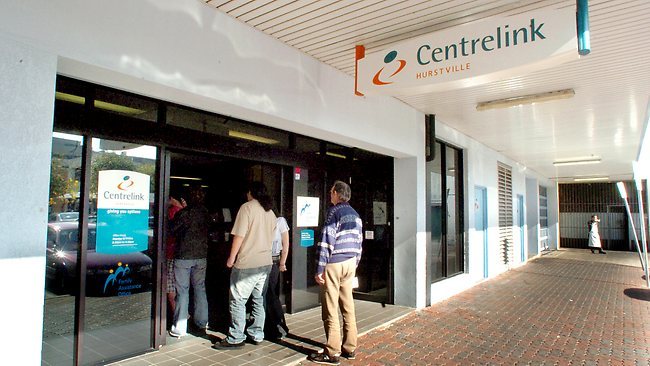
We have seen the Australian federal government’s attitude towards human services with Centrelink and Medicare, and the absolute lack of transparency when it comes to the treatment of private prison operators in Australia. Should our tax payer dollars be used to pay private, overseas companies bonuses for fulfilling their contract’s? If companies need incentives to do a good job it sounds like human services belongs in the hands of public. When will state government’s using private, prison operators admit that a lack of staffing appears to be much of that sectors problems? And lastly, I implore you to please help create awareness about this, if they come for our services it will be the end of Australia or the world as we know it.


The Centrelink debacle has only just begun…

centrelink-4

Image by The Pen

We hear Artificial Intelligence (AI) bandied about a lot in recent times as well as innovation and agility and more recently we have been hearing terms such as robo-debt recovery, algorithms and malware. The Income Security Integrated System (ISIS) ISIS was set up in 1983 and oversaw welfare payment deliveries, customer service, support and compliance activities for Centrelink. In 2015 Marise Payne, former Human Services Minister (and now Defence Minister) called for an overhaul of the system: ‘To deal with the increased demands over the years the original system has literally had another 350 systems bolted on. To put it simply, we are running a turbo-charged Commodore 64 with a spoiler in the age of the iPhone.’

In the 2015-16 budget, the Welfare Payment Infrastructure Transformation (WPIT) program was announced as the replacement for ISIS. The 2015-16, budget measure worth $60.5m is part of a $1.5 billion, seven-year program. The program was described by the government as one of the world’s largest social welfare ICT transformations.

In September 2015, the Department of Human Services (DHS) asked for expressions of interest (EOI) for the first tranche of WPIT for a core software provider. As part of tranche one a panel of members was also to be formed to compete for the other tranches. In a statement, Ms Payne said that: “Finding innovative and expert industry partners is the first step in providing a modern platform that will make interacting with government services easier for our customers,” the Minister added. “Over the next year, the department will commence two major procurement activities to secure a Core Software Vendor and Systems Integrators.”’ 

“The new system will reduce red tape for customers, lower the costs of administering welfare payments and save taxpayers money,” Payne said. “Customers can expect to see improvements to our payment systems by the end of 2016 with enhancements that will make online interactions quicker and easier.”

On March 2nd 2016, legislation was introduced to parliament to assist the government in chasing welfare debt by Social Services Minister Christian Porter. The changes allow interest to be charged on debts, ends the six-year limit on when debt can be pursued and stops debtors from being able to travel overseas. The new interest charge is around nine-percent and applies to social security, family assistance, child care, paid parental leave and student assistance debt. It won’t be imposed on those that have an approved repayment plan. The six-year limit brings it in line with tax debt and the travel ban brings it in line with child support debtors.

And by March 20th it was reported in the media that the DHS had partnered with the Australian Federal Police (AFP) in a venture called Taskforce Integrity. Welfare recipients in areas identified as high-risk, received letters with the AFP logo alongside the Centrelink logo. This is a first, using a police logo on a welfare letter. The first batch of letters was sent to South Queensland and will be rolled out to other geographical areas around Australia considered high risk or noncompliant. The letters warn that the taskforce was “currently working in your community” and that providing the wrong information could constitute welfare fraud, resulting in a “criminal record or a prison sentence”.

The government’s new automated compliance system to detect overpayments began on the 13th of July last year. The system compares Centrelink information with records such as tax records, saving the government money on employing staff. The first error to come to light was it not computing the difference between 52 weeks in a year and 26 fortnights. And in December last year stories from the public began trickling through to the media.

In early August 2016, German software company SAP was selected to be the government software provider and tranche two was opened up for bidding. In the MYEFO published in December 2016 it was revealed that tranche two of the WPIT will cost $313.5 million over four years. The panel is to consist of IBM, HP, Capgemini, and Accenture; with the latter two currently competing for tranche two below:

  • Tranche 2 – Student payments
  • Tranche 3 – Job seeker payments
  • Tranche 4 – Family payments, including disability and carer payments
  • Tranche 5 – Seniors, pensioners and any remaining payments.

It is of note that IBM was also awarded a five-year contract by the DHS in March 2016 worth $484 million. DHS CIO Gary Sterrenberg said: “This innovative and flexible agreement allows the Department to use products, services and expertise through an on- demand model. It ensures value for money for government in maintaining the Department’s existing spend with IBM, with the opportunity to realign technology and services to areas which provide better outcomes for our customers over the five-year term.” And that: “This will also ensure the Government is prepared to transition to new infrastructure with more dynamic capability to support future programmes.”

This week Centrelink’s new robo-public servant was introduced in the media, and it is being tested on the public next month in February. Two robo-assistants will answer questions from the public, one will focus on the National Disability Insurance Scheme, (NDIS) and the other one on student payments. The plan is that if the trials are successful, they will be rolled out to replace traditional public servant roles behind the desk and on the phone in the DHS. Human Service’s Chief Technology officer Charles McHardie, also believes that virtual assistance will have a central role in the future of claims processing at the DHS or in WPIT.

Concerns about the right use of AI are real and there are many examples of it helping to increase inequality in many areas of our lives. Sexism, racism and other forms of discrimination are being built into the machine-learning or predictive algorithms, either intentionally or unintentionally. Machines are taught by humans and this includes any bias that may have. An example of predictive algorithms is Pro Publica’s study of an algorithm, built by a private company, it incorrectly flagged black defendants as “future criminals” more than twice that of white defendants. “The reason those predictions are so skewed is still unknown, because the company responsible for these algorithms keeps its formulas secret,” wrote Microsoft Research principal researcher Kate Crawford in “Artificial Intelligence’s White Guy Problem.”

Australian businesses spend an average of $8.2 million a year on AI technologies according to recent research by Infosys. Algorithms are being developed for more and more things such as predicting investor responses to market shocks and offering financial advice. The research also found that: “Happily, Australia was the most ethically conscious country of the seven surveyed, with 69% [of businesses surveyed] saying ethical concerns were a major barrier to their organisation’s AI deployment plans, compared to just 33% in the US.”

To date 230,000 debt recovery letters have been sent out to Australians. There’s been countless articles written about it and there are 350 individual stories shared on the Not My Debt web site and a false debt tally of $2,124, 501. Thousands of Indigenous Australians have been sent letters with some just paying it off despite knowing it is wrong. Daniel Hayes told NITV News he was repaying the debt but when he started seeing news articles he stopped paying Centrelink. He said in early January that: “I’m in the middle of repaying them $3350 for apparently not declaring correctly in periods where I didn’t even have a job. When I asked for proof, they told me I had to go through my bank records, so I’ve paid it for a year down to $1600,” he said.

In early January, independent MP Andrew Wilkie, said: “I have had at least four people now approach me in my office who I would describe as presenting suicidal and in all those cases we’ve taken what action we thought was appropriate.”

Mr Wilkie requested an investigation into Centrelink by the Commonwealth Ombudsman before Christmas, they agreed on January 9th. Deputy ombudsman, Richard Glenn told the Guardian that the matter was “of significant interest to this office”.

“I can certainly say the ombudsman has approved an own-motion investigation into the matter… this one will be self-initiated because we have a number of complaints and there is significant public controversy about the issue. So, it is an inquiry into the issue at large, rather than into a specific complaint,” Mr Glenn said.

“Certainly, there’s enough information from complaints we’ve received and … that it’s an issue of significant interest to this office, and we’ll be pursuing it.”

The focus will be on three areas: the data-matching process used to compare Centrelink records with those of the tax departments; how Centrelink communicated with clients and how the agency managed the fallout.

Centrelink has been referring distraught people to Lifeline and several current and ex-Centrelink employees have told Mr Wilkie that there was little to no training for the recovery program. Mr Wilkie has written to the Ombudsman this week sharing what he has been told. It all reads badly but what jumps out at me, is that it has been alleged that senior departmental staff have been encouraging officers to compete with themselves over who can achieve the highest debt recovery quotas.

While all of this has been going on for weeks, the government denies that there is a problem, although they have agreed to soften some wording in the letters. And they’ve agreed to start sending letters by registered mail so that Centrelink can track if letters are being received. Many people have been unaware of any alleged debts until a debt collector was knocking on their door.

So far only The Australian has reported that there will be a senate inquiry into Centrelink. Perhaps last year’s failed Census inquiry report can assist them with it. The Turnbull and the Abbott governments don’t have a great record with technology. News about Australia’s biggest infrastructure, the National Broadband Network (NBN) is reduced to tiny PR pieces talking up their rollout but neglecting to tell the rest of the story. The census fallout may not be felt now but it will, that data has been compromised and is vital for planning things like infrastructure. Seeing this play out and knowing that the government is nowhere finished with their five-seven year WTIP plan, sends a shiver down my spine. We can take comfort in the fact that it has united us, so many are fighting for those affected but it is bittersweet, because it feels intentional and a government at war with its own people will never end well.

Link

An example of media disunity

The sunset is seen through smog in Zhengzhou in the Henan province of China.

Image by: Reuters: Stringer

I surfed the ABC news website this afternoon and clicked onto this headline“China fights pollution: New environmental police squad to battle heavy smog”

The article seemed a little threadbare. When this occurs I search further and ideally for an article in the country relevant to the article, I like to get more details this way. I decided to try something different today and scanned the headline blurbs on the first Google page, and I noticed that all of the articles, bar two, started the same: “Officials in Beijing create a new environmental police squad in the latest effort to fight China’s persistent…”

The first one that differed was from The Indian Express, and it began with: ‘Beijing and dozens of cities in China spend many winter days under a thick, gray haze, with air pollution levels that…’

The second one was further down via the Deccan Chronicle and it began withBeijing will set up environmental police force to crackdown on erring factories and step up its supervision and enforce accountability in 16 districts to tackle the recurring pollution problem, officials said on Saturday.’ 

There was a bit more to the story than the basic Associated Press (AP) summaries that the media was reporting pretty much everywhere else in the news. In particular there was no mention of several other measures that were also announced at the same meeting, they included: ‘A target of cutting the use of coal by 30 percent in 2017 to shutting down 500 higher-polluting factories and upgrading 2,500 more. And about 300,000 high-pollution vehicles will also be restricted from entering the city starting next month.’ 

I also found an ABC news analysis that was posted around three hours later than the AP article, with the headline“China’s air pollution crisis shows no sign of ending as nation fails to lower coal use” It goes on to say:

“People are frustrated because air quality was improving in 2016 until coal production ramped up in September to service a mini stimulus package for heavy industries. Cheap coal has powered China’s economic miracle and still provides 70 per cent of the country’s energy. The Government is reluctant to wean itself off coal, fearing unemployment and unrest. In a rare display of anger, China’s rising middle class took to the Chinese social media website “wechat”, demanding the Government take action and protect the children of China.”

There is nothing in the analysis above to back this up in the article in the way of links, or footnotes unfortunately. The writer says further that:

“China’s addiction to coal shows no signs of slowing. China produces and consumes more coal that the rest of the world combined. In the winter its citizens use the most. Like many in northern China, Li Yuan said he had no choice but to burn coal to keep warm. He cannot afford electricity or gas — coal is a quarter of the price. “Using coal is not good. It’s dirty. You touch it and your hands get black,” he said.” 

What also isn’t included in any of the above articles is that China is also investing 2.5 trillion yuan, the equivalent of $US361 billion in renewable power generation by 2020. Fortune reports:

“The investment will create over 13 million jobs in the sector, the National Energy Administration (NEA) said in a blueprint document that lays out its plan to develop the nation’s energy sector during the five-year 2016 to 2020 period. The announcement comes only days after Beijing, the Chinese capital, and other cities in China’s industrial north-east were again engulfed in hazardous smog, caused largely by coal-fired power generation. The NEA said installed renewable power capacity including wind, hydro, solar and nuclear power will account for about half of new electricity generation by 2020.” 

Personally, I was aware of China’s five-year-planning but not of the lofty renewable energy target above until I started to write this. The current Australian government’s energy policies look dismal when compared to this news and it’s not right that the media has missed this, when so many Australians, especially Indigenous Australians care and value nature and worry about the repercussions of our climate changing. China is the world’s biggest investor not just in energy but in renewable energy. It’s citizens need to be able to breathe, just like the developed countries and the rest of the developing countries will follow too, naturally.

We can’t keep ignoring the ginormous elephant that is renewable energy in Australian politics and our economy, this is harming not just investment hopes within our country and overseas investors, but it’s also within our communities. The uncertainty and lack of long-term planning only opens us up to further exploitation by multinational corporations and or foreign countries. China is the world’s biggest producer and investor in solar energy now. Australia still has a chance, together, not on an elitist path, but closer to an egalitarianism one. One that questions authority and those that seek executive powers over us. If journalists can’t or won’t do it, we will just have to. It’s the pioneering Aussie way.